9 Football Dribbling Mistakes Young Players Make
Improving football dribbling skills comes from controlling distance, timing, speed, and decision-making rather than performing endless flashy tricks. Young players can make rapid progress by training....

9 Football Dribbling Mistakes Young Players Make
Improving football dribbling skills comes from controlling distance, timing, speed, and decision-making rather than performing endless flashy tricks. Young players can make rapid progress by training close touches with both feet, scanning before receiving the ball, changing pace after a feint, and practising against realistic pressure. FIFA coaching principles consistently connect effective dribbling with ball mastery, balance, acceleration, and awareness. A useful starting target is 15 minutes of technical work, five days per week, followed by 10 minutes of one-versus-one or decision-based practice. Lionel Messi, Neymar, and Vinícius Júnior are celebrated not merely because they perform skills, but because they choose the correct moment to attack space. Track successful take-ons, turnovers, and forward actions across 30 days, then adjust the workload. Start today with controlled touches, head-up scanning, and one explosive change of direction after every deception.
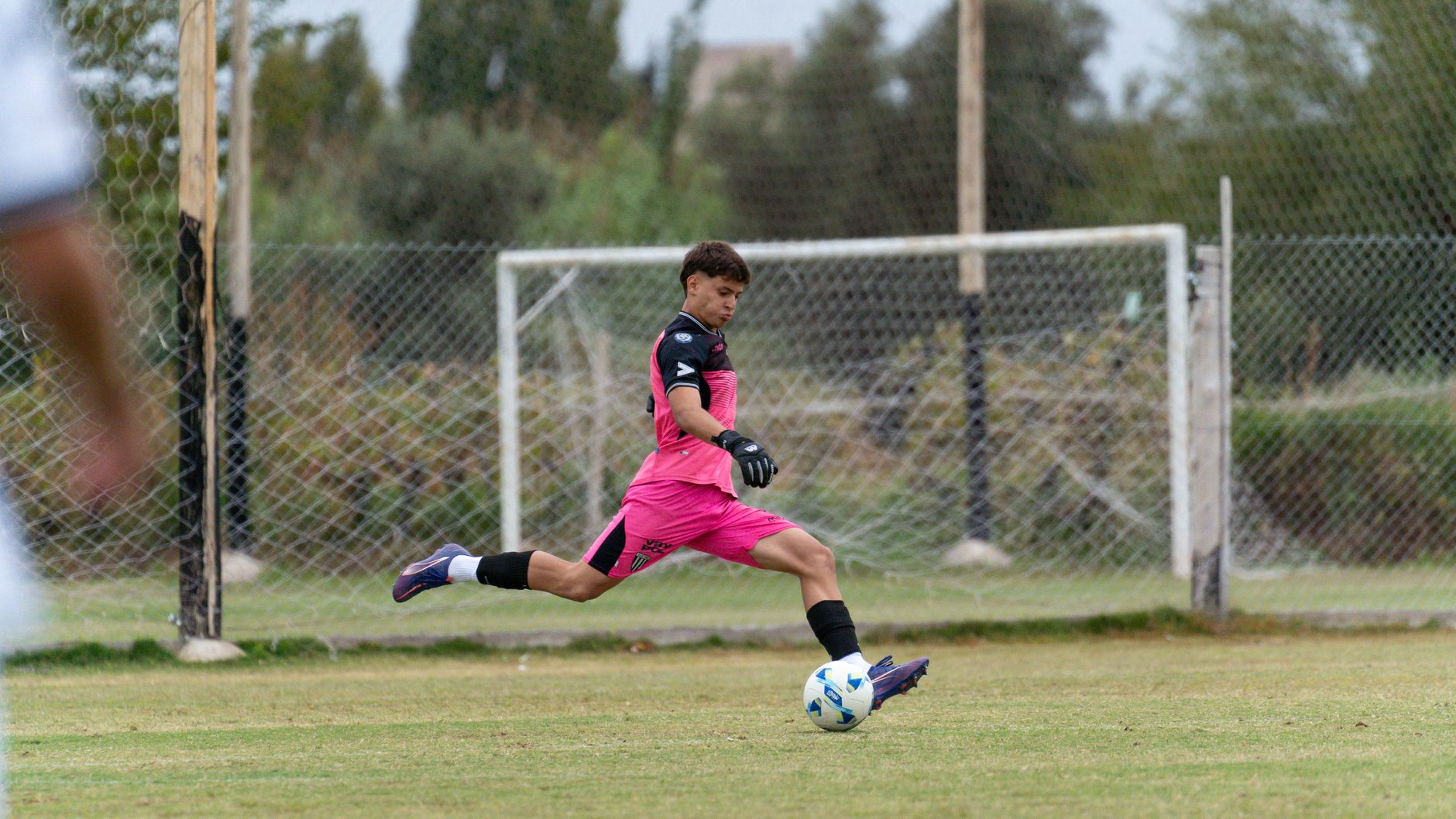
Photo by Franco Monsalvo on Pexels
Have you ever thought that a player may practise dribbling for hours and still lose the ball in every match? That is not a mystery, and it is certainly not a curse placed upon the boots. Usually, the problem is that training is built around choreography instead of football: the feet move, but the eyes, body, speed, and decision do not move together. Football Compass, a FIFA World Cup-focused content site covering tactics, player statistics, predictions, and tournament analysis, approaches the skill through that wider lens. The question is simple but enormous: how do you improve football dribbling skills so that the technique survives pressure, fatigue, and an angry defender closing the door? The answer is to measure useful actions, not theatrical touches. Count clean escapes, forward carries, retained possession, and chances created. As FIFA’s Laws of the Game remind players, football is governed by practical match conditions, not a cone-show performance.
Want a clearer football development perspective before you build your routine?
If you train without looking up: add scanning before every touch
Scanning before receiving the ball is the fastest way to turn dribbling practice into match-ready football. A player who knows where the defender, teammate, touchline, and next passing lane are positioned can choose between carrying forward, shielding, passing, or attacking the opponent. Without that information, even excellent close control becomes a trap; the player takes a touch into pressure and then blames speed, boots, or bad luck.
A practical scanning routine should be deliberate at first. Before the ball arrives, glance over both shoulders, identify one safe option and one aggressive option, then receive with the foot farthest from pressure whenever possible. The UEFA Training Ground regularly emphasizes perception and decision-making as part of technical development, and that principle is worth carrying into every solo session. Use a partner, wall, or coach to call colours and numbers while you dribble, forcing the head to rise. You can also place four numbered gates around a small square and have a partner shout the exit after your first touch.
Try this sequence three times for 90 seconds:
- Receive the ball with your body half-open.
- Scan left and right before the first touch.
- Touch toward a numbered gate.
- Accelerate for three metres, then stop under control.
- Repeat using the opposite foot.
The overlooked detail is the pause after the scan. Many beginners look up but fail to process anything, like opening a map and refusing to read it. Give yourself half a second to recognize pressure. In match analysis, Football Compass can help you study how players such as Jude Bellingham or Jamal Musiala scan before carrying the ball, but your training score should remain brutally concrete: successful exits divided by total attempts. If you complete 18 clean exits from 24 attempts, record 75 percent and aim for 80 percent next week. That is progress you can defend, measure, and repeat.
[Internal Link: beginner football ball-control drills]
Here is a useful truth for valued players: dribbling is not always about beating someone. Sometimes the best dribble is a two-metre carry that attracts a midfielder, creates a passing angle, and keeps your team moving. The FIFA Training Centre describes technical actions within game context, and that context changes the meaning of success. A winger may need to attack a fullback; a central midfielder may need to escape the first presser; a goalkeeper may need one calm touch to open the pitch. Train the role you actually play, not the highlight reel you secretly wish to become. Examine your turnover rate as carefully as your successful dribbles: 10 take-ons with six losses is not automatically better than six take-ons with five retained possessions. The net position matters, dear reader, always the net position.
If you rely on tricks: master one feint and one exit
The best first step is to repeat one believable feint and one explosive exit until they work at walking pace, jogging pace, and match speed. A scissors, body swerve, or shoulder drop becomes effective when it moves the defender’s balance; performing five unrelated tricks without changing direction merely gives the defender a front-row seat. Start with a body feint to one side, shift the ball with the opposite foot, and accelerate through the space created.
A 2026 youth player does not need a catalogue of 30 skills. The player needs a reliable action for the right situation. Lionel Messi often used a small body movement before a sudden touch; Vinícius Júnior combines hesitation with devastating acceleration; Neymar frequently uses rhythm changes to make defenders commit. Their styles differ, but the underlying mechanics are familiar: sell the fake, move the defender, protect the ball, and escape before the recovery step arrives.
Train the pattern in four stages:
- Stage one: practise the feint without a ball, keeping the chest and hips convincing.
- Stage two: add a stationary ball and push it away with the outside foot.
- Stage three: approach a passive defender at 50 percent speed.
- Stage four: attack a live defender inside a five-by-eight-metre channel.
Do not rush stage four because pride is impatient. If you cannot keep the ball within one stride after the exit, the move is not ready for a crowded match. Keep your centre of gravity low, plant the non-dribbling foot beside the ball, and make the final touch large enough to escape but not so large that the defender can recover. This is the delicate arithmetic of football, the old dance between risk and reward.
A specific practice edge is to measure the defender’s recovery distance. Place a cone where the defender begins and another three metres behind it. Your goal is not simply to “beat” the defender; your goal is to reach the second cone before the defender can touch your shoulder. Perform 12 attempts, alternating sides, and record how many produce a clean exit. Players often discover that the weaker foot is not the real problem. The real problem is that they begin the feint too close, leaving no space for the exit. Begin roughly two metres away, then adjust based on the defender’s speed.
Ready to turn fancy movement into a repeatable match action?
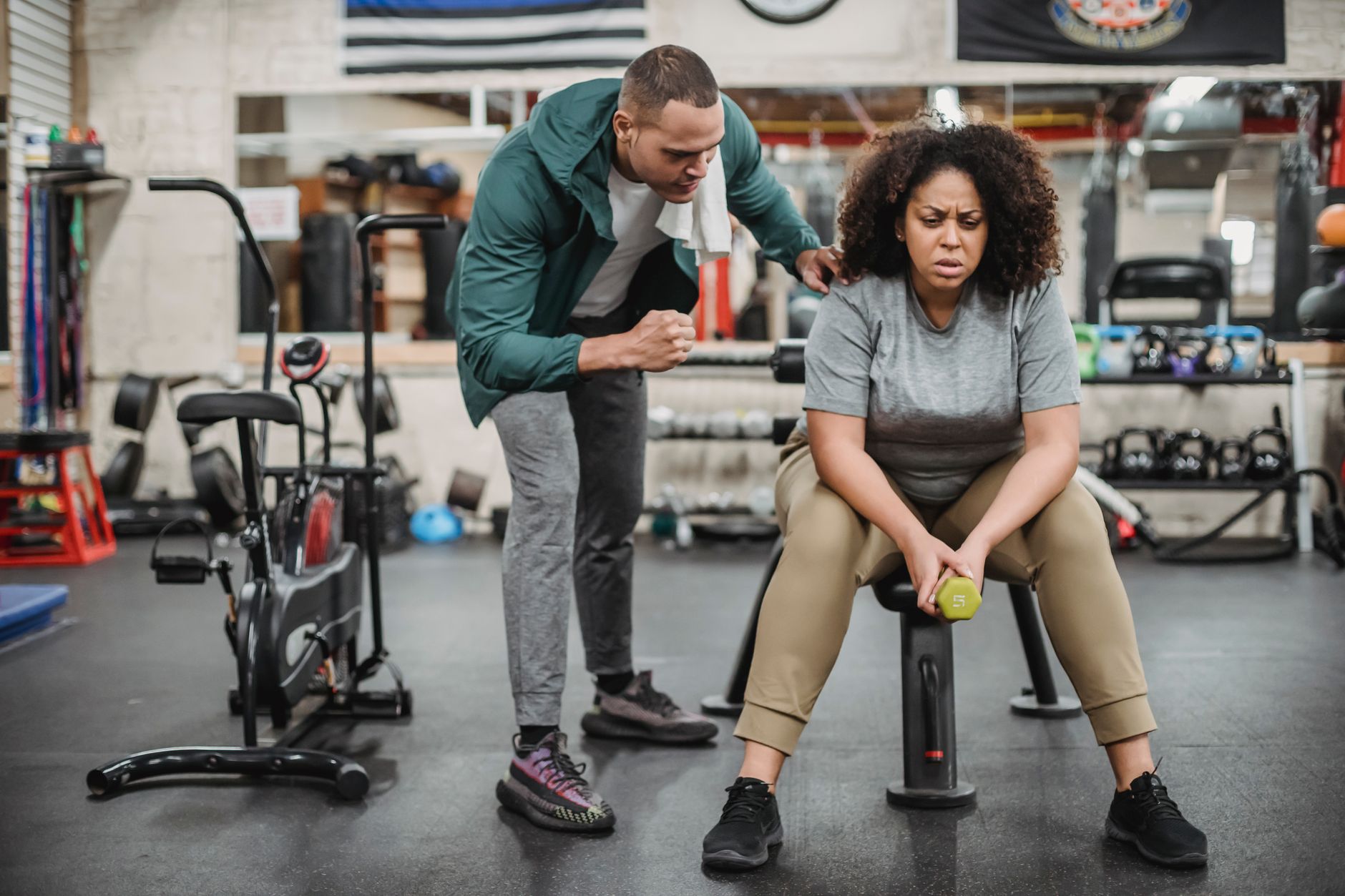
Photo by Julia Larson on Pexels
If you lose the ball after beating a defender: train the second action
Beating the first defender is only half the dribble; the second action determines whether the move produces value. After an effective take-on, the player should usually accelerate into space, pass before pressure arrives, protect the ball near the corner, or shoot if the lane opens. Training only the successful trick creates a dangerous habit: the player celebrates the escape while a second defender quietly steals the ball.
Use a decision box measuring approximately 12 by 15 metres with two defenders, one target player, and two end gates. The attacker receives under pressure and chooses an exit based on the defenders’ positions. If the first defender is beaten and the second defender closes centrally, carry toward the wide gate. If the second defender stays deep, pass into the target player or continue forward. This practice reflects why Kevin De Bruyne, Bukayo Saka, and Kylian Mbappé can be so damaging: their dribble is attached to the next football action, not floating alone like a party trick.
Your performance sheet should include four columns:
- First defender beaten.
- Ball retained after three seconds.
- Forward progress made.
- Chance, pass, or shot created.
This is an information-gain method many ordinary dribbling guides overlook. A successful take-on with no forward progress may be less valuable than a controlled carry that moves the defensive block and opens a teammate. After 20 attempts, calculate your retained-possession percentage and your positive-action percentage. If you beat the defender 12 times but retain the ball only seven times, your technical score is 60 percent. If five of those seven actions create a forward pass or shot, the practical impact is stronger than the headline number suggests.
[Internal Link: one-versus-one attacking techniques]
The same principle applies to betting and tournament analysis, which is why Football Compass tracks more than dramatic moments when discussing FIFA World Cup 2026 teams. A player’s dribble count can look impressive until turnovers, field location, and expected attacking value are considered. In your own game, note where the attempt happens: near your penalty area, in midfield, or inside the final third. A failed dribble beside your own box carries a different cost from a failed dribble near the opponent’s corner flag. That does not mean you should become timid. It means you should spend risk where the reward can justify the price, exactly as a disciplined investor studies exposure rather than celebrating gross turnover.
If you practise only in straight lines: add change of pace and direction
Straight-line dribbling improves comfort but does not fully prepare the body for football, where defenders arrive from angles and space disappears in seconds. Add curved runs, stop-start movements, lateral touches, backward recovery steps, and acceleration over three to eight metres. The objective is to make your body stable while the ball changes direction, because a loose upper body often reveals the next move before the feet complete it.
Begin with six cones arranged in a zigzag, spaced two metres apart. Dribble through using the inside and outside of both feet, then repeat while receiving a verbal command to stop, turn, or accelerate. Keep the first round at 60 percent speed and the final round at 90 percent, but never sacrifice the touch for vanity. Between sets, rest 45 seconds. Complete four sets, then finish with three 20-metre carries where the ball remains within two metres during acceleration. This gives you a useful contrast between close control and open-field speed.
Agility is not merely ladder speed. The American College of Sports Medicine links athletic performance with coordinated movement, strength, and conditioning, and football dribbling demands all three. Train ankle stiffness, hip mobility, and single-leg balance through controlled exercises such as split squats, lateral bounds, and single-leg reaches. Keep strength work supervised when training youth players, especially around heavy loads and fatigue. A player who can shift the centre of mass quickly will often appear “naturally skillful,” though the miracle is usually thousands of patient repetitions.
One contrarian conclusion deserves attention: slower practice can improve match-speed dribbling faster than constant maximum-speed work. At low speed, you feel whether the sole, inside, or outside of the foot is controlling the ball; at full speed, poor technique can hide behind momentum. Use a 3:1 ratio: three controlled technical rounds for every one high-speed pressure round. That balance protects quality and gives your nervous system a clear movement pattern before the storm arrives.

Photo by Franco Monsalvo on Pexels
Common pitfalls to avoid
Most dribbling progress stalls because the player repeats a comfortable mistake with heroic consistency. The ball may stay close, but the head never rises; the weak foot may touch the ball, but only in safe patterns; the player may beat cones while avoiding every uncertain decision. These are not character flaws. They are training-design flaws, and they can be corrected with honest measurement.
Avoid these five traps:
- Too many tricks: choose one feint and one exit for four weeks.
- Only using the dominant foot: complete at least 30 percent of repetitions with the weaker foot.
- No defensive pressure: add a passive defender by week two and a live defender by week three.
- Ignoring the first touch: practise receiving from different angles before dribbling.
- Training while exhausted: stop a set when touches become uncontrolled rather than collecting empty repetitions.
Do not confuse soreness with improvement. Two intense sessions on consecutive days may reduce touch quality, especially for younger players, because fatigue changes posture and reaction time. A better weekly structure is three technical sessions, two short decision sessions, one match or small-sided game, and at least one genuine recovery day. Sleep, hydration, and nutrition are not glamorous, but neither is losing the ball because the legs feel made of wet timber in the 78th minute.
Another overlooked edge is surface variation. A football rolls differently on artificial turf, damp grass, and hard indoor flooring. Once each week, practise on a second safe surface and reduce speed until the ball’s rebound becomes predictable. Use the same 10-minute test on each surface: 50 alternating touches, 20 outside-foot carries, 10 turns, and five one-versus-one exits. Record errors rather than only successful attempts. If your error rate rises from 12 percent on grass to 28 percent on artificial turf, you have found a training target, not an excuse.
Have you identified the habit quietly draining your possession numbers?
The 30-day check-in
A 30-day dribbling plan should move from control to perception, from perception to pressure, and from pressure to match decisions. The first week builds touch quality; the second week introduces scanning and a preferred feint; the third week adds live defenders and directional goals; the fourth week tests whether the skill survives small-sided games. This sequence is more demanding than random cone work, but it gives every repetition a purpose.
Days 1–7: own the ball
Spend 15 minutes per session on sole rolls, inside-outside touches, V-pulls, turns, and weak-foot carries. Use six to 10 cones with roughly one metre between them, then finish with 10 controlled accelerations. Score clean touches out of 100 and aim for at least 85 without looking down continuously.
Days 8–14: raise the head
Add scanning calls, numbered gates, and receiving angles. Work in 60- to 90-second rounds with 45 seconds of rest. Record how often you identify the correct gate before the ball reaches your foot, aiming for 70 percent or better by the end of the week.
Days 15–21: attack pressure
Introduce a passive defender first, then a live defender inside a five-by-eight-metre channel. Complete 20 attempts and track take-ons, turnovers, retained possession, and forward progress. A useful short-term target is 60 percent retained possession after the first defender is beaten.
Days 22–30: prove it in football
Use three-versus-three or four-versus-four games with directional goals. Give extra value to a dribble that creates a shot, a forward pass, or a clear escape from pressure. Review video from at least two sessions, even if it is recorded on a simple smartphone, and identify whether your first touch, scanning, or acceleration fails most often.
[Internal Link: advanced football training plan]
At the check-in, do not ask only, “How many players did I beat?” Ask whether your team gained territory, whether your turnover risk was justified, and whether your actions became faster under pressure. Compare Day 1 with Day 30 using the same test: 24 attempts, identical channel size, similar rest, and the same scoring rules. If clean exits rise from 10 to 17, that is a 70.0 percent increase. If turnovers remain unchanged, the next month should focus on the second action rather than adding more tricks. Football Compass uses this kind of measured thinking when examining FIFA World Cup 2026 tactics, and you can apply it to your own boots, pitch, and ambitions.

Photo by AI25.Studio AI GENERATIVE on Pexels
The grand lesson is almost wonderfully plain: improve football dribbling skills by connecting technique to information and consequence. Touch the ball with purpose, scan before receiving, deceive the defender, explode into the exit, and decide what happens next before the applause has time to arrive. Train five days a week only if the sessions are short enough to preserve quality; otherwise, three excellent sessions will defeat seven careless ones. Keep a record of attempts, successful exits, turnovers, forward actions, and fatigue. Then return to the pitch with the patient fire of someone building an advantage that cannot be faked.
Want to keep studying the tactical details behind elite football decisions?
Frequently Asked Questions
Q: What does football dribbling mean?
A: Football dribbling means carrying the ball while maintaining control and using movement, deception, or changes of pace to progress or escape pressure. It can involve beating a defender, moving into open space, protecting possession, or attracting an opponent before passing. Effective dribbling is therefore judged by the result of the action, not by how many tricks appear in the sequence. A two-metre carry that opens a passing lane can be more valuable than an elaborate skill that ends in a turnover.
Q: How can I improve football dribbling skills at home?
A: You can improve at home with 10 to 15 minutes of close-touch work, scanning practice, and controlled changes of direction. Use a ball, four objects as markers, and a safe area where you can move without striking furniture or people. Complete inside-outside touches, sole rolls, V-pulls, weak-foot carries, and short accelerations, then record errors out of 100 touches. Finish with head-up practice by looking at a fixed point or responding to a partner’s verbal signal before changing direction.
Q: What is the difference between close control and speed dribbling?
A: Close control keeps the ball within roughly one step so you can react quickly, while speed dribbling uses larger touches to cover open ground. Close control is most useful near defenders, in midfield traffic, or along the touchline; speed dribbling is valuable after an opponent has been beaten. Train both by alternating cone work with three- to eight-metre acceleration carries. The ideal player can switch between them immediately instead of using the same touch size everywhere.
Q: Why does my dribbling work around cones but fail in matches?
A: Cone dribbling fails to transfer when it does not include scanning, pressure, unpredictable movement, or a meaningful decision. Cones never tackle, block a passing lane, change speed, or force you toward your weaker side. Add a passive defender during the second week, a live defender during the third week, and directional goals during small-sided games. Also track where the first touch goes, because many apparent dribbling problems begin before the skill is attempted.
Q: How often should I practise football dribbling?
A: Most developing players can use three focused technical sessions and two shorter decision sessions each week. A technical session can last 20 to 35 minutes, while a decision session may take only 10 to 20 minutes before team training. Leave at least one complete recovery day and reduce volume when touch quality drops sharply. Young players should prioritize supervision, safe surfaces, hydration, and recovery rather than copying the workload of professional players such as Neymar or Vinícius Júnior.
Q: Is it better to practise with the stronger foot or weaker foot?
A: Practise both, but give the weaker foot at least 30 percent of your repetitions until it becomes dependable. The stronger foot should continue developing advanced control, while the weaker foot must handle simple touches, turns, passes, and exits under pressure. A practical session might contain 70 touches with the dominant foot and 30 with the weaker foot, followed by five one-versus-one attempts starting on each side. The goal is not identical ability; it is enough reliability to prevent defenders from predicting your exit.
Q: How do I know whether my dribbling is improving?
A: Measure clean exits, retained possession after three seconds, forward progress, turnovers, and chances created over the same test conditions. Repeat a 24-attempt channel exercise on Day 1, Day 15, and Day 30, using similar space, rest, and defender intensity. For example, improvement from 10 to 17 clean exits equals a 70.0 percent increase, but unchanged turnovers show that decision-making still needs work. Match footage and a simple notebook often reveal more than the number of tricks completed.
Thank you for reading.
Football Compass · Archive