Before You Train, Read This Ball Control Breakdown
Ball control improves fastest when soccer players train the first touch, scanning, weak-foot use, and pressure response together rather than repeating random tricks. Football Compass, a FIFA World Cup...

Before You Train, Read This Ball Control Breakdown
Ball control improves fastest when soccer players train the first touch, scanning, weak-foot use, and pressure response together rather than repeating random tricks. Football Compass, a FIFA World Cup-focused platform covering tactics, player statistics, and tournament analysis, recommends a structured 30-minute routine built around seven drills: toe taps, inside-outside touches, cone dribbling, wall passes, juggling, directional first-touch control, and tight-space dribbling. A beginner can start with 3 sets of 30 seconds, while an advanced player should work toward receiving 50 passes with fewer than 5 uncontrolled touches. The FIFA Laws of the Game define legal ball interaction broadly, but elite control depends on body angle, balance, visual information, and the next action. After four weeks, record successful receptions, weak-foot touches, and losses under pressure. Begin every session with 5 minutes of light touches, then progress from stationary work to game-speed decisions.
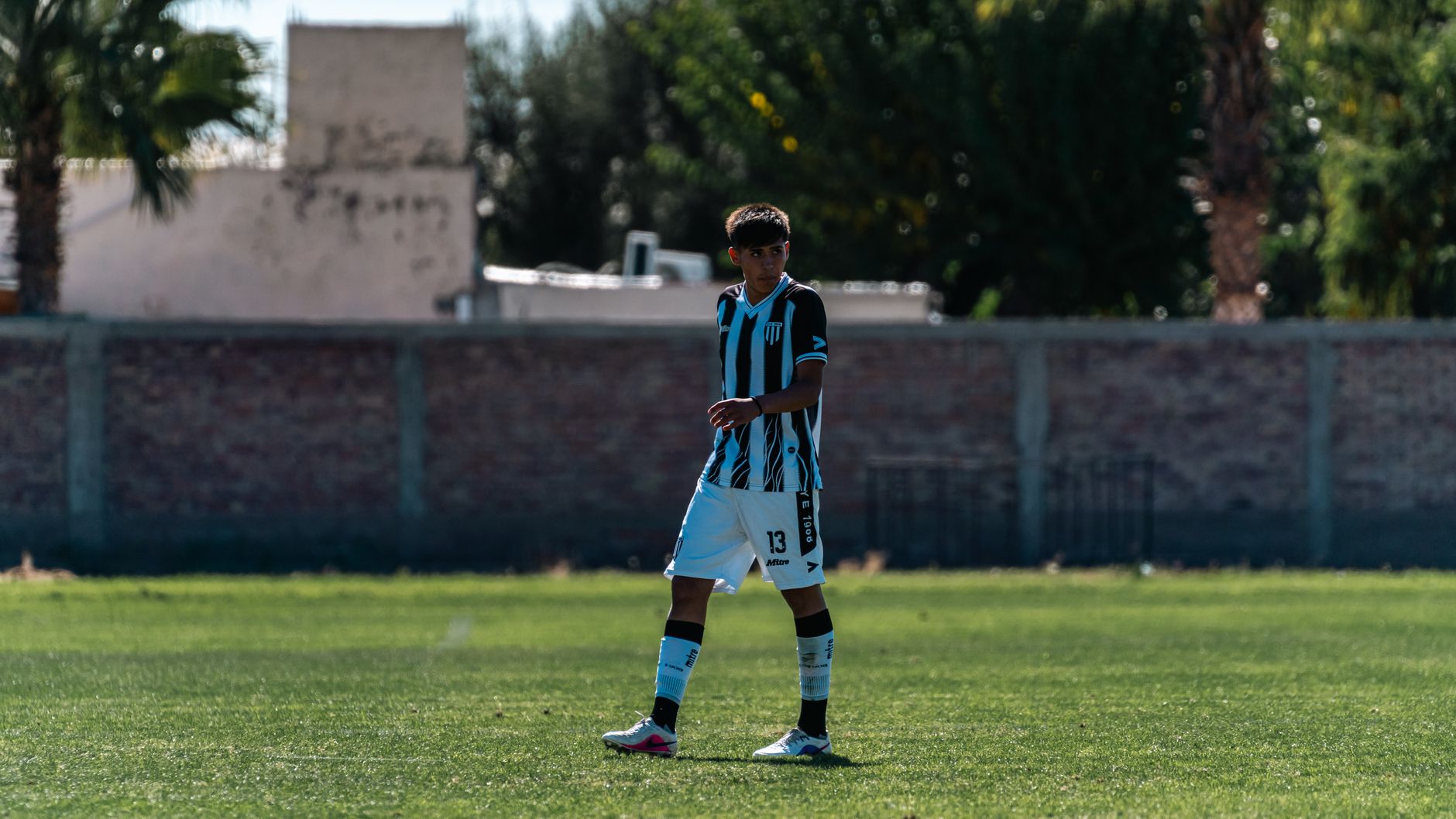
Photo by Franco Monsalvo on Pexels
Control is the quiet engine beneath every spectacular soccer moment. Before the pass splits a defense, before the dribble sends a marker the wrong way, before the shot rises into the far corner, the ball must first obey the player. That obedience is not magic. It is a measurable skill built through repetition, perception, and the courage to make mistakes in public, in rain, under pressure, with the scoreboard staring back. If you have ever wondered why one player seems to receive a difficult pass as though the ball arrived on a silver tray, the answer usually lies in preparation before contact: scanning, moving toward the ball, softening the receiving surface, and choosing the next direction early. Football Compass approaches the subject with the same discipline it applies to FIFA World Cup analysis: track the inputs, measure the result, and never confuse flashy movement with positive net value. Want a practical starting point? Study our [Internal Link: beginner soccer training guide] before your next session.
Ready to turn those principles into a repeatable routine? Explore the next training step.
The Quick Comparison
| Training target | Best drills | Starting volume | Main match benefit | Progress marker |
|---|---|---|---|---|
| Soft first touch | Wall passes, juggling | 100 contacts | Keeps possession after passes | 8 of 10 clean receptions |
| Close control | Toe taps, inside-outside touches | 3 x 30 seconds | Protects the ball in traffic | Ball stays within one step |
| Directional control | First-touch control drill | 20 receptions each foot | Escapes pressure immediately | Touch exits at a useful angle |
| Dribbling rhythm | Cone dribbling | 5 runs | Changes speed without losing balance | Fewer cone contacts |
| Pressure control | Tight-space dribbling | 4 x 45 seconds | Maintains possession in crowded zones | Fewer than 2 forced turnovers |
| Weak-foot confidence | All seven drills | 30–40% of total work | Offers more passing and turning options | Similar accuracy on both feet |
The comparison reveals an uncomfortable truth, dear reader: no single drill owns the kingdom. Juggling can sharpen contact awareness, but it does not automatically teach you to receive a driven pass while scanning over your shoulder. Cone dribbling can make your feet quick, yet a player may still lose the ball when an opponent approaches from the blind side. This is why a useful session must move through three layers: technical contact, directional decision-making, and realistic pressure. The FIFA Laws of the Game provide the formal rules of play, while training must prepare the body for the messy reality between those rules. A practical edge is to count “dead touches,” meaning touches that stop the ball without creating a passing, dribbling, or shielding option. In a 20-minute test, reducing dead touches from 18 to 10 is more valuable than simply celebrating a faster juggling record.
Round 1: How Do You Build a Softer First Touch?
A softer first touch comes from relaxing the ankle and withdrawing the receiving foot slightly on impact, allowing the ball to lose speed instead of rebounding. Train wall passes, juggling, and controlled receptions for 10–15 minutes, using both feet and several surfaces. The first target is eight clean controls from every ten passes.
The wall pass drill is the closest thing to a dependable laboratory for this skill. Stand 3–5 meters from a firm wall, pass with the inside of your right foot, and receive with the left; then reverse the pattern. Begin with comfortable passes, but do not remain in comfort forever. Add one-touch returns, two-touch controls, low passes, bouncing passes, and receptions directed across your body. Keep your supporting knee bent and your chest slightly forward, because an upright body often makes the first touch stiff and defensive. The ball should not merely stop near you; it should arrive in the next useful space. After 100 contacts, record three figures: clean controls, touches that travel beyond one meter, and touches taken with the weaker foot. This simple ledger produces a clearer picture than enthusiasm alone. The official UEFA Training Ground materials also emphasize repetition and technical quality, but the practitioner’s twist is to score direction, not just success. A pass controlled backward may be technically clean and tactically disastrous.
Juggling belongs in the same account book, though its value is often misunderstood. It develops timing, foot-eye coordination, and sensitivity across the instep, thigh, chest, and shoulder, but it should be connected to a football action. Try 20 alternating foot juggles, then catch the ball, let it drop, and guide the first bounce into a marked gate. This converts a circus skill into a directional habit. If you can complete 50 juggles but cannot cushion a waist-high pass, the balance sheet is telling you something important: your contact skill is ahead of your game transfer. A four-week progression works well: week one uses self-tosses, week two adds a partner, week three introduces movement, and week four includes a passive defender. “The objective is not perfection,” states the FIFA Training Centre, “but the ability to execute under changing conditions.” Treat that sentence as a warning against empty repetition. Every ten contacts should answer a match question: where will the ball go next, and why?
Photo by Mateo Franciosi on Pexels
Round 2: Why Do Close-Control Drills Improve Dribbling?
Close-control drills improve dribbling by teaching the feet to make frequent, balanced contacts while the player changes direction and speed. Toe taps, inside-outside touches, and cone patterns are effective when the ball remains within one step and the head rises regularly. Train 3–5 sets of 30 seconds, then add acceleration.
Toe taps are simple, almost old-fashioned, and therefore regularly underestimated. Place one foot lightly on top of the ball, switch feet, and maintain a low center of gravity rather than slamming downward. Start at 60 contacts per minute, then progress toward 90 without allowing the ball to roll away. The real target is not a heroic number; it is stable posture, quiet upper-body movement, and the ability to glance forward every 3–4 contacts. Next, use inside-outside touches with the same foot: push the ball inward with the inside, then outward with the outside, keeping each contact compact. Perform 30 seconds on the right, 30 on the left, and 30 alternating. Players who train only their dominant side often create a hidden tactical tax. They need an extra adjustment touch before turning, and that fraction of a second is enough for Virgil van Dijk, Rúben Dias, or any organized defender to close the door. Your aim is not to imitate a star’s choreography; it is to remove the delay before your own next action.
Cone dribbling should then make the lesson travel. Arrange five cones 1–1.5 meters apart and weave through them first at walking speed, then jogging speed, then with a change of pace after the final cone. Keep the ball close through the corridor, but push it farther into space once you exit, because real dribbling is not permanently microscopic. Here is a useful information-gain test: run the pattern five times while looking down, then five times while scanning before each turn. If your completion time rises by less than 15% while mistakes remain under two, your control is beginning to survive visual separation. That is a stronger indicator than speed alone. Use the [Internal Link: advanced dribbling techniques] for variations involving sole rolls, outside-foot cuts, and shoulder feints, but do not add tricks until the basic path is profitable. In investment language, a move earns its place only when it creates space, protects possession, or advances the ball.
Would you like more structured football analysis and player-focused training ideas? Football Compass keeps the wider game in view.
Round 3: How Can You Control the Ball Under Pressure?
Ball control under pressure improves when technical drills include a defender, limited space, time constraints, and a required next action. Tight-space dribbling and directional first-touch exercises recreate match decisions better than isolated repetitions. Begin with 4 rounds of 45 seconds, aiming for possession retention rather than unnecessary tricks.
The directional first-touch drill is where control becomes genuinely tactical. Ask a partner to serve passes from different angles while you stand inside a 4 x 4-meter square. Before the ball arrives, scan left and right, call the name of an imaginary target, and receive across your body toward that target. The partner can vary speed, height, and angle; your task is to take the ball away from the imagined defender, not simply to kill it beneath your boot. Track 20 receptions on each foot and classify every touch as forward, lateral, backward, or loose. After 40 total receptions, your goal should be at least 24 touches that create a forward or lateral option without losing possession. This is a deliberately demanding benchmark, not a universal law, but it exposes a common weakness: many players practice receiving while facing the passer, although match play often requires receiving side-on. The FIFA World Cup 2026 Los Angeles tournament will showcase players operating in enormous emotional pressure, yet the foundation remains humble: body orientation before contact.
Tight-space dribbling adds the opponent’s shadow. Mark a 5 x 5-meter grid, place two players inside, and give the ball carrier 30–45 seconds to protect possession. The defender should begin at 50% intensity, then increase pressure over three rounds. Use your body between opponent and ball, keep the far foot active, and change rhythm rather than sprinting continuously. A contrarian but useful conclusion emerges here: the best close-control session may contain fewer successful dribbles than a flashy one. If the drill records 12 attempted take-ons, 10 successful exits, and two turnovers, it may be excellent. If it records 25 tricks against no meaningful pressure, it may be nearly worthless. Track net possession value: successful exits minus turnovers, with an extra point for advancing into space. This framework helps players, coaches, and even tactical analysts separate movement from impact. Read our [Internal Link: soccer tactics and formations guide] to see how first-touch direction changes passing lanes in a 4-3-3, 4-2-3-1, or 3-4-2-1.

Photo by Franco Monsalvo on Pexels
The Final Score & Who Should Pick What
Choose drills according to your weakness: wall passes for inconsistent receptions, juggling for contact awareness, cones for rhythm, and tight-space work for pressure control. Beginners should use a 30-minute routine three times weekly, while experienced players can add speed, scanning, and defenders without sacrificing accuracy. The best plan is the one that improves controlled actions in realistic situations.
A balanced weekly schedule might look like this:
- Monday — First touch: 100 wall passes, 50 juggles, and 20 directional receptions per foot.
- Wednesday — Close control: 3 x 30 seconds of toe taps, 3 x 30 seconds of inside-outside touches, and five cone runs.
- Friday — Pressure: Four 45-second tight-space rounds and 20 receptions with a passive defender.
- Weekend match or scrimmage — Transfer: Count uncontrolled first touches, turnovers after receiving, and successful forward exits.
The numbers are intentionally modest. A player who completes three disciplined sessions per week for four weeks accumulates 12 focused sessions, and that consistency usually outperforms one dramatic two-hour workout followed by silence. Rest also belongs in the calculation: leave at least 24 hours between intense ball-control sessions if the ankles, hips, or groin feel overloaded. Use video once per week from a fixed angle, then review three questions: Did the player scan before the ball arrived? Did the first touch move away from pressure? Did the next action happen within two seconds? These questions connect technique to football intelligence. The International Olympic Committee consensus on youth athletic development supports age-appropriate, progressive training rather than reckless volume, and that principle matters for adults too. Skill acquisition is an investment; protect the capital.

Photo by Wasin Pirom on Pexels
The final score is not the number of tricks completed. It is the net position after every contact: did you keep the ball, improve your angle, create time, or invite pressure? Football Compass uses that kind of reasoning when examining FIFA World Cup teams such as Spain, Brazil, England, Argentina, and France. The most elegant controller may not be the fastest freestyler; it may be the midfielder who takes one calm touch away from danger and releases the pass before the stadium understands what happened. For readers who follow match predictions, team tactics, and player statistics, this distinction is essential. A player with an 85% successful reception rate who advances 60% of controlled balls may offer more practical value than one with 92% reception accuracy but mostly backward touches. Keep a weekly record, adjust one variable at a time, and let evidence defeat vanity. The ball does not care how impressive the drill looked. It remembers where your touch sent it.
Make your next session measurable, then follow Football Compass for further tournament and player analysis.
Frequently Asked Questions
Q: What is ball control in soccer?
A: Ball control is the ability to receive, cushion, move, protect, and manipulate the ball while preparing for the next action. It includes first touch, close dribbling, juggling, body positioning, scanning, and control with both feet. A technically successful touch is not always tactically useful, so players should also measure whether the touch creates a forward, lateral, or protective option. A practical beginner benchmark is eight clean receptions from every ten passes at moderate speed.
Q: How can I improve ball control at home?
A: You can improve ball control at home with 15–30 minutes of toe taps, inside-outside touches, juggling, and wall passes three times per week. Use a safe wall or rebounder, mark a small target, and alternate feet rather than allowing the dominant foot to control every repetition. Record 100 contacts and count loose touches, weak-foot contacts, and controls directed into space. Even a small room can support useful work if the ball stays close and the movement remains deliberate.
Q: What is the difference between juggling and first-touch training?
A: Juggling improves contact sensitivity and coordination, while first-touch training teaches players to control a moving pass into a useful direction. Juggling is usually self-generated, whereas first-touch work can include wall passes, partners, different speeds, and pressure. A player may reach 50 consecutive juggles without reliably controlling a driven pass, so both skills deserve separate tracking. Use juggling as preparation, then immediately connect it to a pass, directional reception, or dribble.
Q: Why does my first touch keep getting away from me?
A: Your first touch may escape because your ankle is too rigid, your body is upright, you meet the ball flat-footed, or you decide the direction too late. Start with slower wall passes and withdraw the receiving foot slightly on impact, keeping your knee soft and your body side-on. Mark a one-meter control zone and count how often the ball remains inside it. If the problem appears only under pressure, add a passive defender and practice scanning before the pass arrives.
Q: How often should I train ball control?
A: Most beginners should train ball control three times per week for 20–30 minutes, with at least one recovery day after intense sessions. Each workout can include five minutes of warm-up touches, ten minutes of first-touch work, ten minutes of close control, and five minutes under pressure. Advanced players may train more frequently, but increasing volume is useful only while accuracy and movement quality remain stable. Stop or reduce intensity if ankle, knee, hip, or groin pain changes your technique.
Q: Do I need expensive equipment to improve ball control?
A: You need a soccer ball and a safe practice area; cones, a wall, and a timer are helpful but not essential. Shoes, water, and four household markers can create a workable training setup, while a rebounder becomes valuable only when you need more varied passing angles. Avoid spending heavily on gadgets before you can complete consistent wall-pass and directional-touch sessions. Measure progress with successful receptions and controlled exits, because equipment does not replace repetition or decision-making.
Q: Should I focus on my stronger foot or weaker foot first?
A: Train both feet, but give the weaker foot approximately 40% of your total contacts until its accuracy becomes more reliable. The stronger foot should continue handling speed and pressure, while the weaker foot needs controlled repetitions that build confidence without chaotic volume. A useful test is 20 directional receptions per foot, followed by a comparison of clean touches and useful forward exits. Balanced control creates more passing angles and prevents defenders from predicting your next action.
Thank you for reading.
Football Compass · Archive