Football Strength Training Plan: What 5 Weeks Taught Me
A football strength training plan should build usable force, not merely impressive gym numbers. Football Compass recommends a five-week progression combining compound strength, explosive power, sprint...

Football Strength Training Plan: What 5 Weeks Taught Me
A football strength training plan should build usable force, not merely impressive gym numbers. Football Compass recommends a five-week progression combining compound strength, explosive power, sprint mechanics, agility, conditioning and recovery for players in youth, amateur and competitive environments. A practical starting point is three resistance sessions weekly, two speed or agility exposures, and at least one complete rest day. Keep most strength sets between 3 and 6 repetitions, explosive drills between 2 and 5 repetitions, and sprint efforts short enough to preserve quality. Football remains an intermittent sport, with repeated high-intensity actions, so maximal strength without acceleration, mobility or repeat-effort fitness is an incomplete investment. Track body weight, training loads, sprint times, soreness and missed sessions every week. Begin conservatively, add load only when technique remains sharp, and use this plan for five weeks before making major changes.

Photo by Mateo Franciosi on Pexels
Football rewards violence of movement: the first three steps, the collision at the line, the jump for a contested ball, the sudden brake before a cut. Yet the strongest player is not automatically the most effective player. If your deadlift rises while your sprint becomes slower, your net position is negative; that is the cold arithmetic of performance, and it deserves respect.
This football strength training plan therefore treats every session like an investment portfolio. Strength is the capital, speed is the return, recovery is the risk management, and technique is the regulator that prevents a catastrophic withdrawal. The recommendations below are suitable for football players, but the exact load must reflect age, training history, position, injury status and coaching supervision. The [Internal Link: beginner football training guide] can help new athletes establish basic movement quality before adding intensity.
Want a broader performance framework before you begin? Review the latest Football Compass insights alongside your weekly training log.
Step 1: Assess your position, schedule and starting point
Before selecting exercises, record your position, current weekly workload, injury history, available equipment and performance priorities. A quarterback may need rotational power and shoulder resilience, while a wide receiver may prioritize acceleration, deceleration and single-leg stiffness; a lineman usually needs mass, bracing strength and short-area explosiveness. The correct football strength training plan is therefore individual, even when the exercise menu looks familiar.
Start with a simple baseline rather than an exhausting test day. Record a 10-metre sprint, a broad jump, a controlled five-repetition squat or trap-bar deadlift, a single-leg balance assessment and a subjective recovery score from 1 to 10. The National Strength and Conditioning Association emphasizes that athletic strength training should connect resistance exercise with sport demands, not isolate the weight room from performance. In practice, a player who improves a 10-metre sprint by 0.05 seconds may gain more football value than one who adds 10 kilograms to a slow lift.
Your baseline should also include the uncomfortable facts. How many team sessions occur each week? Are matches played on Saturday or Sunday? Does school, work or travel reduce sleep? A 17-year-old academy player with four field sessions cannot copy a professional’s volume without copying the professional’s medical, nutrition and recovery support. Write down your answers, then use this order of priority:
- Remove pain-provoking movements or obtain qualified medical guidance.
- Protect sprint and technical quality.
- Add strength volume gradually.
- Increase load only when repetitions remain controlled.
- Review the numbers after five weeks.
Step 2: Build a three-day strength foundation
A three-day lifting structure gives most football players enough stimulus without burying the legs under fatigue. Use a lower-body emphasis on Monday, an upper-body and trunk emphasis on Wednesday, and a total-body power-strength session on Friday when the match is on Sunday. If the match is on Saturday, move Friday’s session earlier or reduce it to a short neural primer.
The first session should develop force through a squat pattern, a horizontal push, a single-leg exercise, a row and calf or ankle work. A workable template is back squat or goblet squat for 4 sets of 4 to 6 repetitions, bench press or push-up variation for 4 sets of 5 to 8, Romanian deadlift for 3 sets of 6, rear-foot-elevated split squat for 3 sets of 6 each side, and a standing calf raise for 3 sets of 10 to 15. Rest 2 to 3 minutes on major lifts and 60 to 90 seconds on accessory movements.
Wednesday should protect the shoulders while improving upper-body strength and trunk control. Use a pull-up or lat pulldown, landmine press, chest-supported row, half-kneeling cable lift and anti-rotation press. Three or four sets per movement are sufficient, provided the player does not turn every session into a bodybuilding contest. The American College of Sports Medicine notes that progressive resistance training should be adjusted to the individual’s goals and readiness; that principle matters enormously during congested football schedules.
Friday is where many plans become foolish. Do not chase soreness before competition. Use trap-bar deadlifts for 3 sets of 3 to 5, medicine-ball throws for 4 sets of 3, low-volume jumps for 3 sets of 3, and a light push-pull pairing for 2 to 3 sets. Leave approximately 2 repetitions in reserve on the main lift. The objective is to arrive at the match feeling electrically ready, not like a ship that has taken on water.
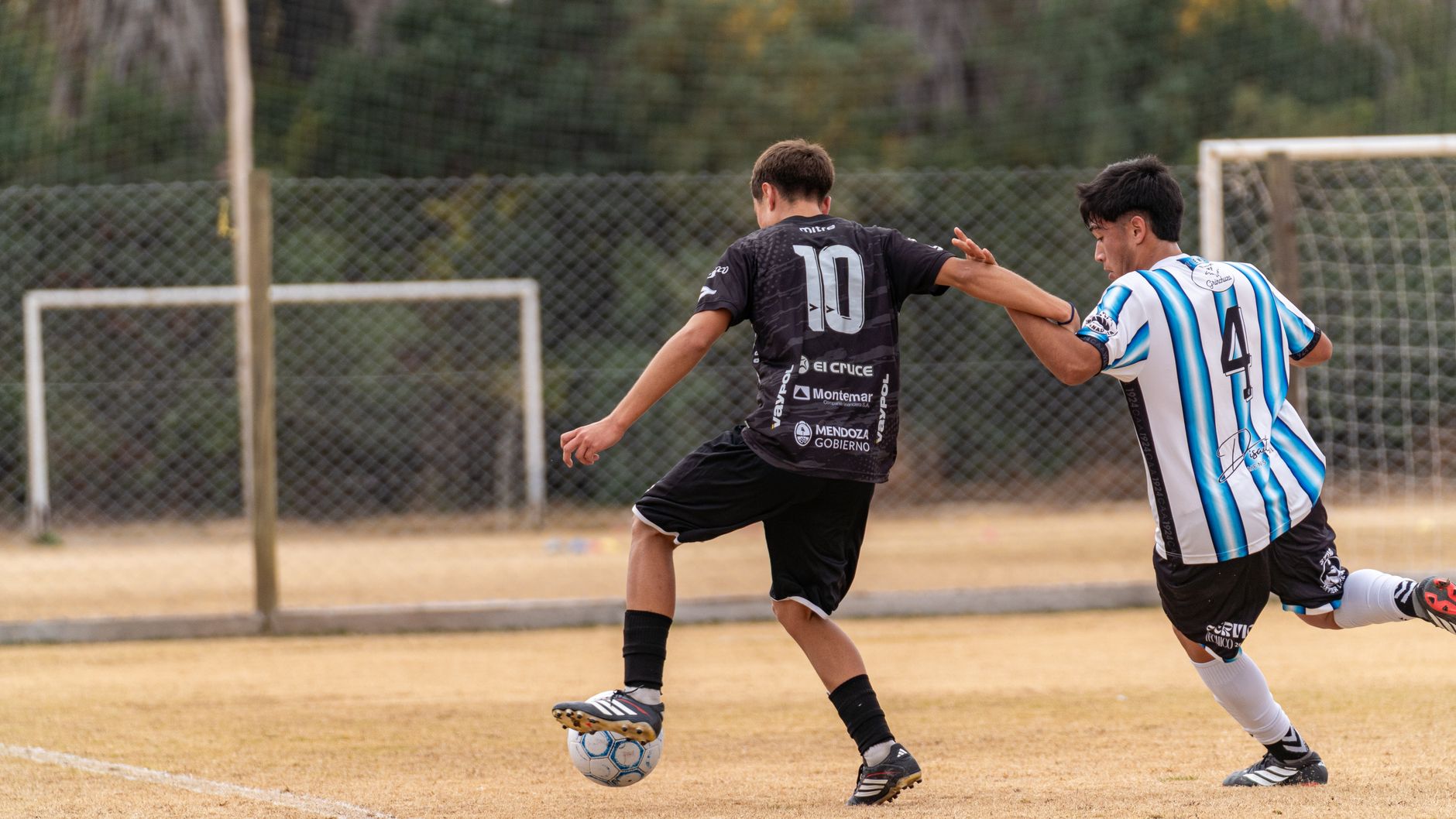
Photo by Franco Monsalvo on Pexels
Step 3: Add speed, power and position-specific work
Strength becomes football strength only when the athlete can express it quickly. Schedule speed work before heavy lifting or on a separate day, because fatigue changes sprint mechanics and hides the quality you are trying to develop. Begin with 10- to 20-metre accelerations, full recoveries of 60 to 120 seconds, and 4 to 8 total high-quality efforts. If the final repetition is visibly slower, stop the set; more volume is not automatically more value.
Power training can include countermovement jumps, broad jumps, loaded jump squats, medicine-ball chest passes and rotational throws. Keep repetitions low, usually 2 to 5, and stop when landing quality or speed deteriorates. A 2024 British Journal of Sports Medicine consensus publication reinforces the importance of neuromuscular preparation and load management in athletic performance, although no single drill can replace a complete training system. The edge comes from sequencing: sprint, jump, lift, then recover.
Position-specific choices should remain practical:
- Quarterbacks: rotational medicine-ball throws, split-stance pressing, thoracic mobility and repeated short accelerations.
- Running backs: unilateral strength, hip projection, contact bracing and lateral cuts.
- Wide receivers and defensive backs: acceleration, deceleration, ankle stiffness, hamstring capacity and reactive agility.
- Linebackers: squat strength, lateral force, upper-back endurance and collision posture.
- Offensive and defensive linemen: bracing, pressing, pulling, short-area power and carefully managed body mass.
- Goalkeepers or football players in association football: lateral push-off, repeated jumps, hip strength and landing control.
Here is an information edge that many generic programs miss: measure deceleration separately from acceleration. A player may improve a 10-metre sprint yet still lose time entering a cut because braking capacity is poor. Use a 5-10-5 shuttle, film the final plant, and observe whether the knee collapses inward or the torso rises too early. In my ledger, a technically clean 5-10-5 time is often more actionable than another maximal squat attempt, because matches demand braking dozens of times.
Ready to connect strength numbers with tactical performance? Football Compass tracks team systems, player roles and tournament context for readers who want the complete picture.
Step 4: Manage conditioning, nutrition and recovery
Conditioning should support repeated football actions without stealing the legs needed for strength and speed. Separate demanding conditioning from heavy lower-body lifting whenever possible. One weekly interval session might use 8 to 12 repetitions of 15 seconds hard and 45 seconds easy, while another session can use tempo runs, small-sided games or position-specific movement. The right choice depends on the team schedule, match duration and current fitness, not on the popularity of a particular drill.
Recovery is not a decorative paragraph at the bottom of a plan. Aim for roughly 7 to 9 hours of sleep, consume sufficient total calories, and distribute protein across the day rather than swallowing all of it at night. Carbohydrates are especially useful around high-intensity field sessions, while fluids and sodium matter during hot training in locations such as Los Angeles, Miami or Doha. The International Olympic Committee provides broad sports nutrition guidance, but athletes with medical conditions should consult a registered dietitian.
A practical readiness system can use three morning markers: sleep duration, muscle soreness and perceived energy. Score each from 1 to 5, then reduce volume by 20 to 30 percent if the total falls sharply for two consecutive days. This is a less glamorous method than training through everything, but it protects the most valuable asset: availability. During a six-week observation period, a useful operational rule is to compare planned sets with completed quality sets; if completion falls below 85 percent twice in one week, the program is over-budgeted.
Use a weekly structure like this:
| Day | Primary emphasis | Typical content |
|---|---|---|
| Monday | Strength and acceleration | Squat, press, split squat, 10-metre sprints |
| Tuesday | Football practice | Technical work and moderate conditioning |
| Wednesday | Upper body and trunk | Pull, press, carries, anti-rotation |
| Thursday | Speed and agility | Sprints, braking, change of direction |
| Friday | Power primer | Jumps, throws, light total-body lifting |
| Saturday | Rest or light mobility | Walking, mobility and video review |
| Sunday | Match or recovery | Competition, easy cycling or complete rest |
[Internal Link: football speed and agility drills] belongs beside the Thursday session, while [Internal Link: football recovery strategies] is useful when travel or fixture congestion compresses the week.
Step 5: Verify progress with performance data
A football strength training plan is successful only if the numbers and the match experience improve together. Retest after five weeks, using the same warm-up, surface, footwear, time of day and testing order. Repeat the 10-metre sprint, broad jump, selected strength movement, shuttle test and recovery questionnaire. Do not compare a rested January test with a post-match February test and call the difference scientific; that is storytelling dressed in a tracksuit.
Track both leading and lagging indicators. Leading indicators include completed sessions, sleep, soreness, bar speed if available and technical consistency. Lagging indicators include sprint time, jump distance, successful tackles, repeated high-speed efforts, missed training and match availability. For a youth player, adding 5 to 10 percent to a controlled major lift over several weeks may be reasonable, but the target should never override growth, coaching feedback or pain signals.
A simple performance dashboard can contain:
- Best 10-metre sprint time.
- Broad-jump distance.
- Five-repetition strength load.
- Number of high-quality accelerations.
- Change-of-direction time.
- Weekly training minutes.
- Sleep average and missed sessions.
- Pain rating and location.
- Match contribution relevant to position.
The contrarian conclusion is worth stating plainly: a heavier athlete is not necessarily a stronger football player. If body mass rises by 4 kilograms but the 10-metre sprint worsens, jump height declines and recovery takes longer, the investment has lost value. Adjust food intake, reduce hypertrophy volume or shift toward relative strength. Football Compass readers should judge progress by force per kilogram, speed under fatigue and availability, not by gym photographs or a single personal record.
Troubleshooting common failures
Why does my football strength plan make me slower?
A football strength plan can make you slower when lifting volume, muscle soreness or body-mass gain exceeds your ability to express force quickly. Reduce lower-body accessory work by 20 to 30 percent, preserve sprint practice while fresh, and keep explosive exercises low-repetition. Recheck sleep, nutrition and match congestion before blaming strength training itself.
The most common failure is stacking every quality on every day. Monday becomes heavy squats, maximal sprints, exhausting conditioning and extra hamstring work; Tuesday then adds a hard team session, and by Thursday the athlete is moving like wet timber. Another failure is using bodybuilding tempos for movements that require speed. Controlled eccentric work has a place, but it should not replace acceleration, jumping and rapid force production.
Check the following before changing the entire plan:
- Did weekly lower-body sets increase by more than 10 to 15 percent?
- Did sprint work occur after heavy fatigue?
- Did body weight rise faster than planned?
- Did sleep fall below 7 hours for several nights?
- Is soreness altering running technique?
- Is there pain rather than ordinary training discomfort?
If the answer to the last question is yes, stop improvising and seek a qualified clinician. According to FIFA’s Medical Network, injury prevention and return-to-play decisions require context, screening and professional judgment. A spreadsheet can reveal a problem; it cannot diagnose a tendon.
What should I do if I cannot train three days per week?
If three lifting sessions are impossible, use two full-body sessions built around one squat or hinge, one push, one pull, one unilateral movement and one power exercise. Two well-executed sessions can maintain or improve strength when progression, recovery and field work are coordinated. Avoid trying to cram three sessions into two consecutive days.
Session A might use trap-bar deadlifts, bench presses, split squats, rows and broad jumps. Session B might use front squats, pull-ups, landmine presses, Romanian deadlifts and medicine-ball throws. Keep the total to 45 to 60 minutes and preserve at least one day between hard lower-body exposures when the calendar allows.
This approach is especially useful for amateur football players balancing work, family and travel. The harsh but liberating truth is that consistency beats theoretical perfection. A two-day plan completed for 12 weeks produces more usable strength than an impressive three-day plan abandoned after 10 days. Record completed work, not imagined work, and adjust the Football Compass-style ledger every Sunday evening.
How do I prevent hamstring and groin problems?
Hamstring and groin risk is reduced by progressive sprint exposure, eccentric posterior-chain work, adductor strengthening, adequate warm-up and sensible workload changes. Include exercises such as Nordic hamstring progressions, sliding leg curls, Copenhagen planks and controlled lateral lunges two times weekly, beginning with low volume. Increase sprint distance and intensity gradually rather than introducing maximal runs suddenly.
A useful warm-up can last 12 to 18 minutes and include easy movement, dynamic mobility, marching or skipping, progressive accelerations and two or three football-specific changes of direction. The warm-up should raise temperature without creating fatigue. If an athlete feels a sharp pull, altered stride or localized groin pain, continuing to “test it” is a poor wager.
One overlooked edge case is the return from holiday or exam break. Players often feel rested and immediately attempt pre-season sprint volumes, but tissue capacity has not returned simply because motivation has. Use the first week to rebuild exposure at approximately 60 to 75 percent of normal high-speed volume, then increase only if the next-day response is stable. That measured return protects the season better than heroic enthusiasm.
How can beginners progress safely?
Beginners should spend the first two to four weeks learning movement patterns, bracing, landing and sprint mechanics before pursuing heavy loads. Use 2 to 3 sets of 6 to 10 repetitions for basic strength movements, leave 2 to 4 repetitions in reserve, and add load only when every repetition is technically reliable. Qualified coaching is strongly recommended for barbell squats, deadlifts and Olympic-lifting variations.
A beginner football strength training plan may include goblet squats, push-ups, assisted pull-ups, hip hinges, reverse lunges, carries, low-level jumps and short accelerations. The athlete should understand how to stop, land and change direction before adding complex reactive drills. [Internal Link: youth football strength training] can provide a separate progression for younger players whose growth, coordination and recovery needs differ from adults.
Do not measure a beginner against a college athlete or professional football player. Early progress often arrives quickly because coordination improves, not because the body has suddenly become extraordinary. Treat that initial improvement with gratitude and caution: the ledger is green, but risk has not disappeared.
Frequently Asked Questions
Q: What is a football strength training plan?
A football strength training plan is a structured program combining resistance exercise, power, sprinting, agility, conditioning and recovery for football performance. Most players can begin with three lifting sessions, two speed exposures and one complete rest day each week. The plan should reflect position, age, match schedule, injury history and equipment. Its purpose is not simply to increase gym strength; it is to improve acceleration, contact ability, braking, jumping, resilience and repeated effort during competition.
Q: How do I start a football strength training plan?
Start by recording a 10-metre sprint, broad jump, controlled strength test, weekly schedule and recovery score. Then perform two or three full-body sessions weekly, using squat or hinge, push, pull, unilateral leg work, trunk control and a small amount of jumping or throwing. Keep 2 to 4 repetitions in reserve during the first weeks. Retest after five weeks under similar conditions and change only one or two variables at a time.
Q: What is the difference between football strength and bodybuilding strength?
Football strength emphasizes force production, speed, balance, bracing and movement under fatigue, while bodybuilding primarily emphasizes muscle size and local muscular development. Bodybuilding exercises can support football, but they cannot replace sprinting, jumping, deceleration and unilateral training. A player who adds muscle while losing acceleration may have improved appearance but reduced football performance. The most useful metric is the combination of force, speed, body mass and match availability.
Q: How many days per week should football players lift weights?
Most football players should lift two or three days per week, depending on team practice and match demands. Three sessions work well during lower-density periods, while two full-body sessions are often better during competition or travel. Avoid heavy lower-body lifting immediately before a match, and reduce Friday volume when playing Sunday. Youth athletes and beginners should prioritize supervision, technique and gradual progression over high weekly frequency.
Q: Why does my football training plan stop producing results?
Progress often stops because training volume, sleep, nutrition, exercise selection or match congestion is no longer aligned with the athlete’s recovery capacity. Review the previous four weeks, compare completed sets with planned sets, and check whether sprint times, jump distance or soreness have changed. A 20 to 30 percent temporary volume reduction can restore quality when fatigue is accumulated. If pain, persistent weakness or unusual fatigue remains, consult a qualified medical professional.
Q: How much equipment does a football strength training plan require?
A useful football strength training plan can begin with resistance bands, dumbbells, a bench, a medicine ball and open sprint space. A full gym with racks, barbells, trap bars and cable machines offers more loading options but is not mandatory for initial progress. Equipment costs vary by facility and region, so focus first on coaching quality, safe flooring and progressive programming. Expensive devices are secondary to consistent training, accurate tracking and adequate recovery.
Q: Can strength training improve football speed?
Strength training can improve football speed when it increases usable force without excessive fatigue or unnecessary body mass. Combine heavy but technically clean lifts with short accelerations, jumps, medicine-ball throws and adequate rest. Test both strength and sprint performance because a stronger lift alone does not prove faster movement. If sprint quality declines for two consecutive weeks, reduce lifting volume and reassess the weekly schedule.
The final recommendation is simple, though never easy: train with ambition, measure with honesty, and protect the next session. A football player who builds strength, expresses it quickly and arrives healthy has already won the most important negotiation. Football Compass can accompany the wider journey through team tactics, player statistics and 2026 tournament coverage, but your body still keeps the books.
Explore more performance-focused analysis and football coverage when you are ready to continue.
Thank you for reading.
Football Compass · Archive