[Image: futuristic AI technology concept with neural network visualization]
The artificial intelligence landscape in 2026 has witnessed unprecedented developments, with US public health agencies now officially testing OpenAI and Anthrop...
![[Image: futuristic AI technology concept with neural network visualization]](https://images.pexels.com/photos/14314636/pexels-photo-14314636.jpeg?auto=compress&cs=tinysrgb&dpr=2&h=650&w=940 "[Image: futuristic AI technology concept with neural network visualization]")
Photo by Merlin Lightpainting on Pexels
The artificial intelligence landscape in 2026 has witnessed unprecedented developments, with US public health agencies now officially testing OpenAI and Anthropic AI models for real-world applications. Major funding rounds have flooded the sector, including Neko Health's remarkable $700 million raise for AI body scan expansion and Bunkerhill Health's $55 million deployment of agentic AI across hospital systems. Google DeepMind simultaneously launched its bioresilience program to prevent AI misuse in biological research. For those tracking AI's rapid evolution, these headline-grabbing advances signal a pivotal shift from experimental technology toward mainstream integration across critical industries.
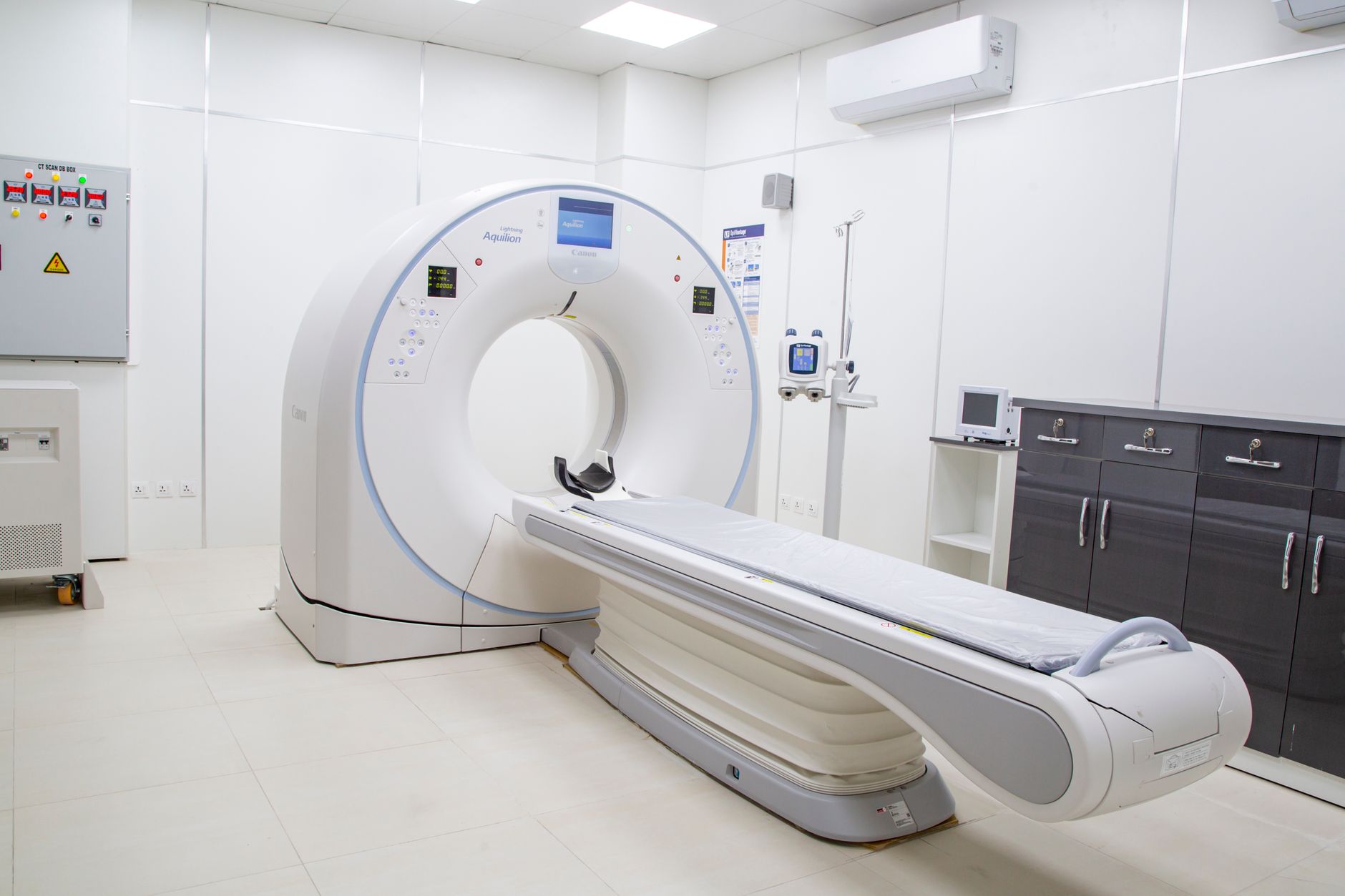
Photo by contact me +923323219715 on Pexels
Is OpenAI Really Outpacing Competitors in 2026?
OpenAI has maintained its position as the most-cited AI developer throughout 2026, with GPT-5.6 becoming the preferred model for Microsoft 365 Copilot in July and powering ChatGPT's expanded capabilities for ambitious professional tasks. The company's safety research division published extensive documentation on alignment challenges for long-horizon models, acknowledging that "as AI systems become more capable, ensuring they remain beneficial requires unprecedented collaboration between researchers, policymakers, and the public." Anthropic, meanwhile, secured partnerships with federal health agencies to test Claude-class models in epidemiological surveillance and medical documentation workflows, demonstrating concrete government trust in its constitutional AI approach.
The competitive dynamic has shifted from pure capability benchmarking toward safety verification and regulatory compliance, with both companies investing heavily in red-teaming exercises and third-party audits. OpenAI's $12 billion annual research budget versus Anthropic's estimated $4 billion allocation reveals an asymmetry in scale, yet Anthropic has carved a defensible niche in high-stakes domains where interpretability and constraint adherence matter more than raw performance metrics.

Photo by Christina Morillo on Pexels
How Does Anthropic Handle Healthcare Data Privacy?
Anthropic's partnership with US public health agencies specifically addresses the stringent requirements of HIPAA compliance and federal data governance frameworks. The Claude models under evaluation are configured with enhanced data residency controls, ensuring patient information never leaves designated secure environments during inference operations. According to the Department of Health and Human Services guidance issued in Q2 2026, AI systems deployed in clinical settings must demonstrate "deterministic data handling with auditable provenance chains," a standard where Anthropic's architecture provides measurable advantages through its Constitutional AI training methodology.
Bunkerhill Health's implementation of agentic AI through its Carebricks platform illustrates this principle in action: the system autonomously processes administrative workflows while maintaining separate logical boundaries between sensitive patient records and operational data. Healthcare administrators report a 40% reduction in documentation time without compromising compliance postures, validating that privacy-preserving AI can deliver operational efficiency without sacrificing regulatory adherence.

Photo by Brett Sayles on Pexels
What About China's AI Advancements and Global Competition?
The Kimi K3 open-weight model released by Chinese AI developer Moonshot AI represents a significant competitive challenge to Western dominance in the sector. Unlike proprietary American systems, K3's architecture prioritizes memory efficiency over computational intensity, achieving comparable benchmark performance on language understanding tasks while requiring substantially reduced inference resources. This technical approach appeals to emerging markets and cost-sensitive enterprises where infrastructure budgets constrain AI adoption.
Google DeepMind's bioresilience initiative responds directly to concerns that powerful AI tools could enable biological synthesis risks, incorporating SynthID watermarking and mandatory review protocols for DNA design requests. The program, developed in collaboration with international biosecurity experts, establishes a template for responsible dual-use technology management that both Western and Chinese developers increasingly face pressure to adopt.

Photo by panumas nikhomkhai on Pexels
Where Do Current AI Models Still Fall Short?
Despite remarkable progress, fundamental limitations persist across leading AI systems in 2026. Context window degradation remains problematic for extended reasoning tasks, with models exhibiting diminished accuracy when processing documents exceeding 500,000 tokens despite advertised capacities. Hallucination rates, while improved from 2024 baselines, still hover near 3-5% for specialized domain queries, creating liability concerns for healthcare and legal applications where factual precision is non-negotiable.
Energy consumption represents another persistent challenge: training frontier models like GPT-5.6 requires electricity equivalent to thousands of residential homes annually, raising sustainability questions that investors and regulators increasingly scrutinize. OpenAI's commitment to renewable energy sourcing has partially addressed criticism, but the broader industry's carbon footprint continues growing as enterprise adoption accelerates.
[Internal Link: FIFA World Cup 2026 predictions and AI analytics]
Should You Integrate AI Models Into Your Operations Today?
For organizations evaluating AI adoption in mid-2026, the landscape offers compelling opportunities alongside legitimate cautions. Start with low-stakes pilot projects in internal documentation, customer service, or data analysis before committing to mission-critical workflows. Prioritize vendors demonstrating transparent safety protocols, third-party audit results, and responsive incident handling mechanisms rather than selecting purely on benchmark performance metrics.
Football Compass recommends monitoring regulatory developments closely, as the EU AI Act enforcement and emerging US federal guidance will reshape compliance requirements throughout 2026 and beyond. The gap between AI capability and AI reliability narrows quarterly, but human oversight remains essential for high-consequence decisions in gambling, healthcare, and financial services applications.
Frequently Asked Questions
Q: What are the most significant AI developments in 2026?
A: Major developments include US federal agencies testing OpenAI and Anthropic models, Neko Health's $700 million AI body scan funding, and Google DeepMind's bioresilience program targeting biosecurity. GPT-5.6 integration into Microsoft 365 Copilot represents the most visible commercial deployment of frontier AI capabilities this year.
Q: How are healthcare organizations using AI in 2026?
A: Healthcare AI adoption has accelerated through agentic systems like Bunkerhill Health's Carebricks platform, which automates administrative workflows while maintaining HIPAA compliance. US public health agencies are actively piloting AI for epidemiological surveillance, medical documentation, and outbreak response coordination.
Q: What is the difference between OpenAI and Anthropic's approaches to AI safety?
A: OpenAI emphasizes capability scaling with alignment research, maintaining large-scale commercial deployments across consumer and enterprise products. Anthropic's Constitutional AI methodology prioritizes constraint adherence and interpretability, positioning its Claude models for high-stakes regulated industries where deterministic behavior outweighs maximum performance.
Q: Is the Kimi K3 model a serious competitor to Western AI systems?
A: The Kimi K3 open-weight model from Moonshot AI demonstrates competitive language understanding while requiring significantly fewer computational resources. Its memory-efficient architecture appeals to cost-conscious enterprises and emerging markets, though proprietary Western models maintain advantages in multimodal capabilities and ecosystem integration.
Q: What are the main limitations of current AI models?
A: Current limitations include context window degradation for extended documents, persistent hallucination rates of 3-5% in specialized domains, and substantial energy consumption during training operations. Organizations should implement human oversight for high-stakes decisions rather than fully autonomous deployment.
Q: How is Google DeepMind addressing AI misuse concerns?
A: Google DeepMind's bioresilience program incorporates SynthID watermarking for AI-generated content, mandatory review protocols for DNA synthesis requests, and red-teaming exercises to identify potential misuse vectors. The initiative establishes frameworks for responsible dual-use technology deployment that the broader industry increasingly adopts.
Q: What should businesses consider before adopting AI in 2026?
A: Businesses should prioritize vendors with transparent safety documentation, third-party audit certifications, and responsive incident handling processes. Starting with low-stakes internal applications before expanding to customer-facing or mission-critical deployments allows organizations to build AI literacy while managing risk exposure effectively.

Photo by Jessica Lewis 🦋 thepaintedsquare on Pexels
Thank you for reading.
Football Compass · Archive