Inside FIFA World Cup 2026: A 48-Team Schedule Breakdown
The 2026 FIFA World Cup runs from June 11 to July 19, 2026, spanning 39 days and featuring 48 teams competing in 104 matches across 16 venues in the United States, Mexico, and Canada. This is the firs...
Inside FIFA World Cup 2026: A 48-Team Schedule Breakdown
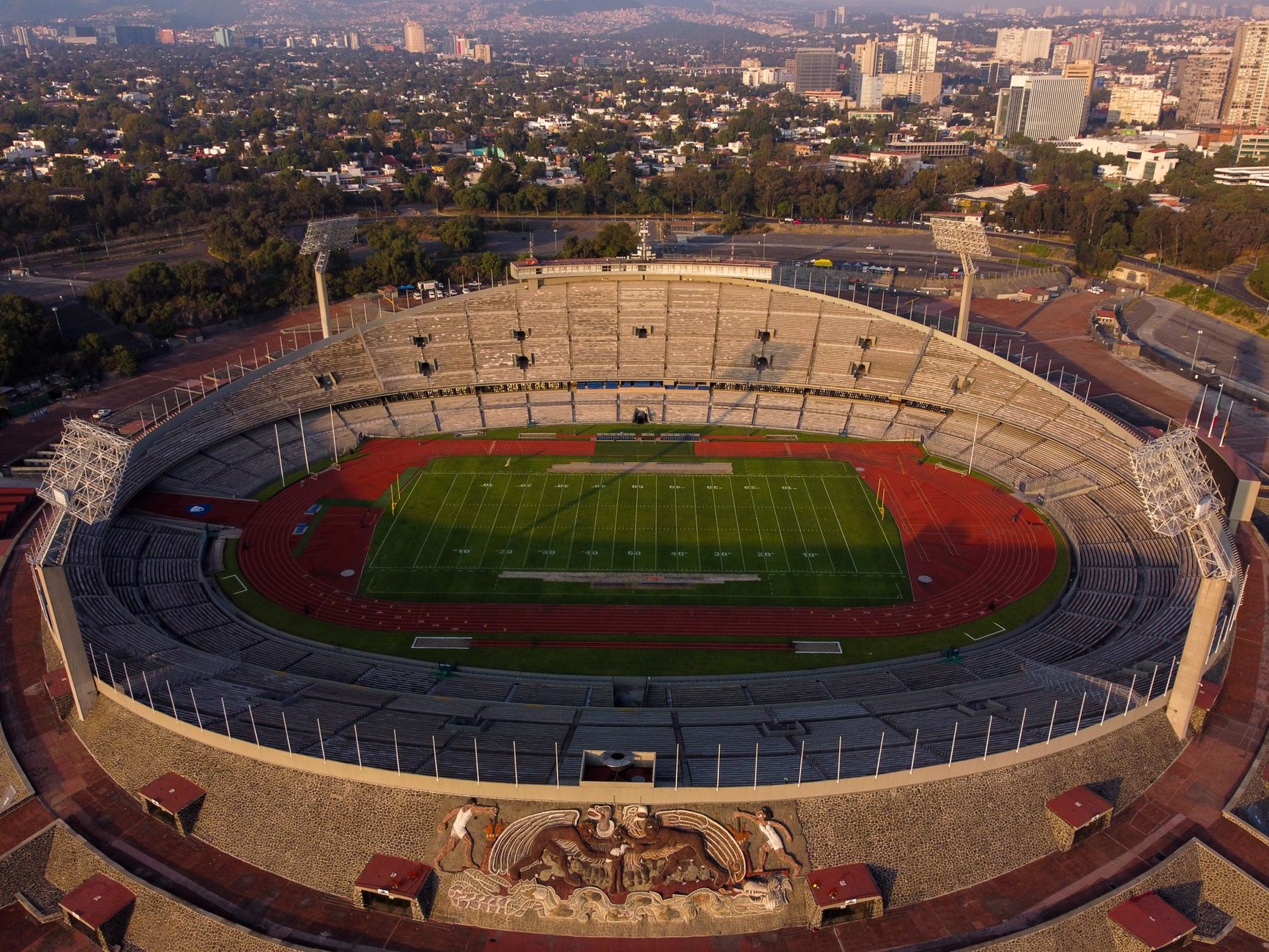
The 2026 FIFA World Cup runs from June 11 to July 19, 2026, spanning 39 days and featuring 48 teams competing in 104 matches across 16 venues in the United States, Mexico, and Canada. This is the first tournament in FIFA's history to use a 48-team format, expanding from the 32-team structure that defined every World Cup since 1998. The opening match is scheduled at Estadio Azteca in Mexico City, while the final will be held at MetLife Stadium in East Rutherford, New Jersey. With matches spread across three countries and at least four time zones, scheduling logistics are more complex than any previous World Cup. Football Compass tracks every fixture, group draw, and qualification result as the tournament approaches. Fans should map their viewing calendar early, since marquee matchups could fall at inconvenient times depending on geographic location.
Photo by Antonio Ochoa on Pexels
Have you ever stopped to ask whether a 48-team World Cup actually makes the tournament better, or just longer? Most coverage celebrates the expansion as historic progress. The contrarian take: more teams means more dead rubber matches, more travel fatigue, and a knockout round that starts with 32 sides still alive after the group stage. That's not a World Cup revolution, it's a diluted format with extra padding. Here's how to navigate the 2026 schedule intelligently, no matter what role you play.
If You Want to Attend Matches in Person: Plan Across Three Countries
Cross-border logistics define the 2026 World Cup experience unlike any tournament before it. The 16 host venues are split across the United States (11), Mexico (3), and Canada (2). According to FIFA's official tournament overview, the opening match at Estadio Azteca (Mexico City) on June 11 and the final at MetLife Stadium (East Rutherford, New Jersey) on July 19 bookend a 39-day window that demands serious travel planning from anyone chasing multiple games.
If you're attending in person, treat this as a continental tournament, not a single-city event. The furthest venue pair, Vancouver's BC Place to Mexico City's Estadio Azteca, sits roughly 3,800 km apart. Even within the US cluster, flying from Miami to Seattle for a group-stage match means a six-hour flight plus time zone shift. Expect domestic airfare spikes in June 2026, particularly for routes connecting host cities like Atlanta, Dallas, Houston, and Kansas City.
For fans crossing the US-Canada or US-Mexico border, passport requirements and visa rules vary. Canadian and Mexican citizens generally enter the US with simplified documentation, but international visitors from other regions should confirm visa eligibility well before June 2026.
[Internal Link: complete list of 2026 World Cup host stadiums and venues]
If You're Tracking Team Schedules: Understand the New Group Format
The 48-team field is divided into 12 groups of four teams each, up from the eight groups used in 2022. The top two teams from each group (24 total) automatically advance to the knockout stage, joined by the eight best third-placed teams across all groups. That means 32 of 48 sides reach the round of 32, a qualification rate of roughly 67%, compared to 50% under the old 32-team model.
For neutral fans tracking specific national teams, this creates a longer group stage but shorter rest periods between fixtures. Group matches run from June 11 through June 27, with teams playing three matches in roughly 10 days. The round of 32 begins June 28, and from there the tournament moves to a more familiar knockout cadence.

Photo by Kari Alfonso on Pexels
Why does the format shift matter for your schedule tracking? Because the final round of group matches (June 25-27) will feature simultaneous kickoffs across multiple time zones to prevent teams from gaining strategic advantage by knowing earlier results. If you're building a viewing calendar, expect cluster kickoff times that may overlap with work or sleep hours depending on your region. Football Compass publishes confirmed kickoff times as soon as FIFA releases them.
The new format also means more "dead rubber" matches in the final group round, since several third-place spots will already be secured. Critics argue this reduces the drama of the group stage. Defenders counter that more nations participate in the world's biggest sporting event. Either way, the schedule density is real: 104 matches in 39 days, averaging nearly three games per day during peak periods.
If You're Building a Viewing Calendar: Know the 39-Day Window
The 2026 tournament spans 39 days, three more than the 2022 edition in Qatar. The expanded group stage accounts for most of that extension. For fans planning around work, family, or travel commitments, understanding the match density windows helps prioritize which fixtures to watch live versus on replay.
Key schedule milestones:
- June 11, 2026: Opening match at Estadio Azteca, Mexico City
- June 12-27: Group stage (72 matches total)
- June 28 - July 1: Round of 32 (16 matches)
- July 4-7: Round of 16 (8 matches)
- July 11-12: Quarterfinals (4 matches)
- July 15: Semifinals (2 matches)
- July 19: Final at MetLife Stadium, East Rutherford, NJ
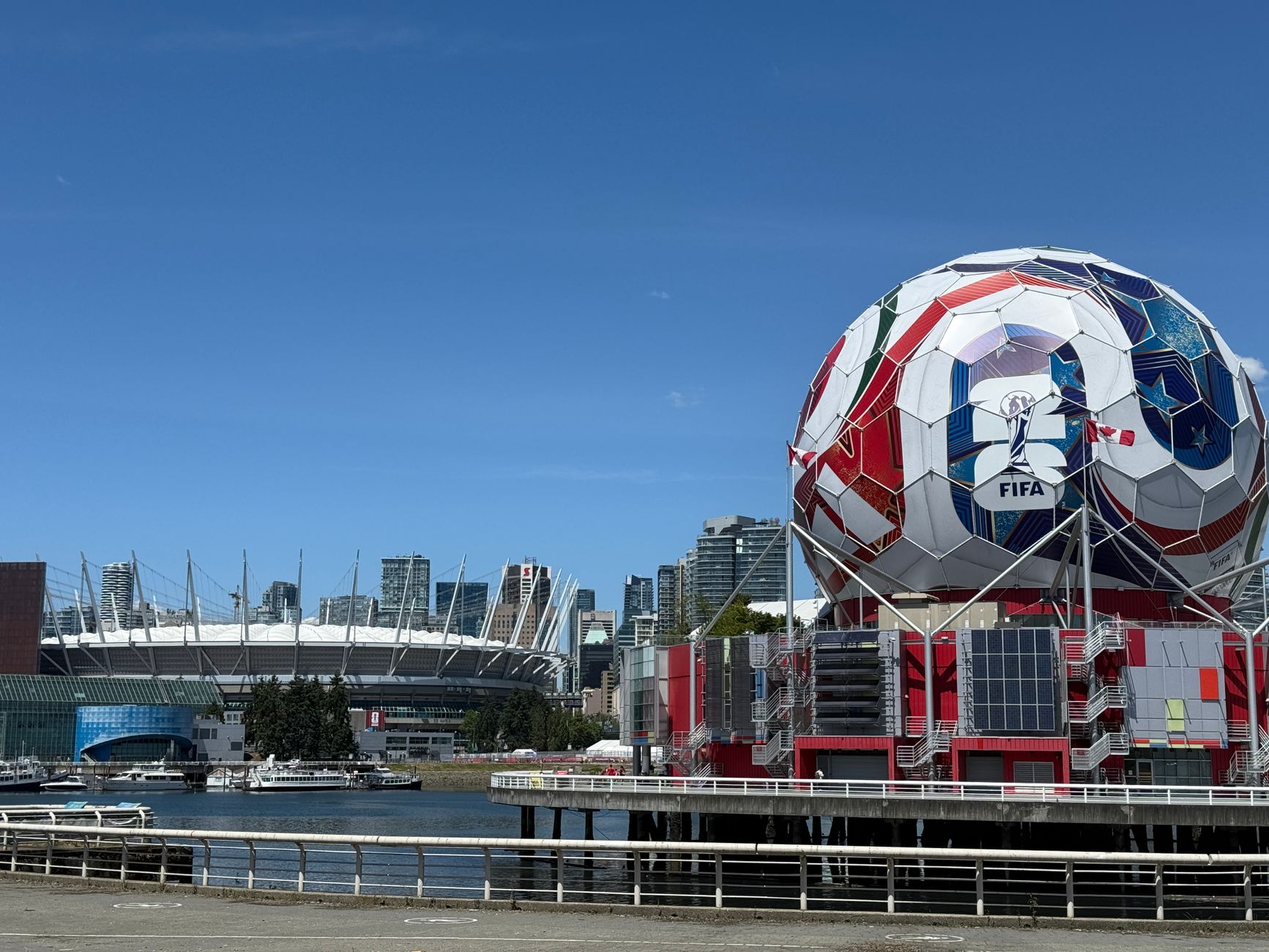
Photo by The Six on Pexels
Why should you care about the exact match windows? Because the round of 32 introduces a complication: with 32 teams entering a single-elimination bracket, the match count spikes sharply between June 28 and July 1. Football fans with limited viewing time should identify which knockout fixtures are most likely to feature their national team and block calendars accordingly.
Time zone distribution matters too. Of the 16 venues, 10 are in the Eastern Time Zone, 2 in Central, 2 in Mountain, and 2 in Pacific. Most matches will kickoff at 12:00 PM, 3:00 PM, 6:00 PM, or 9:00 PM local time, which creates a rolling broadcast schedule for international viewers. A 9:00 PM Eastern kickoff means 6:00 PM Pacific, 2:00 AM in London, and 3:00 AM in Berlin. Plan accordingly if you're not in North America.
[Internal Link: 2026 World Cup broadcast rights by country and region]
Common Pitfalls to Avoid When Planning Around the 2026 Schedule
Most fan guides gloss over the practical headaches. Here's where first-time World Cup planners (and even veterans) tend to miscalculate:
- Assuming a single-city experience: The 2026 tournament isn't like Qatar 2022, where every venue sat within a 55-km radius. You cannot walk between stadiums. Flights, rental cars, and border crossings are mandatory for multi-match itineraries.
- Ignoring summer heat: June and July temperatures in host cities like Houston, Dallas, Phoenix-adjacent venues, and Monterrey can exceed 38°C (100°F). Daytime matches carry heat-stroke risk for spectators.
- Miscalculating the round of 32 fixture distribution: Unlike previous tournaments where group winners faced runners-up from other groups, the 2026 format means the bracket is seeded based on group-stage performance. Some round-of-32 matchups will be predictable; others will pit strong third-place teams against group winners.
- Forgetting that the third-place playoff was eliminated: FIFA confirmed the third-place match will not be played in 2026. If your team loses the semifinal, there is no consolation fixture.
- Visa and entry document timing: International travelers should apply for US, Canadian, or Mexican visas (depending on match locations) at least 90 days before arrival.
Here's the contrarian framing most articles skip: the 2026 World Cup schedule favors casual viewers and penalizes serious fans. Casual viewers get more matches, more storylines, and lower-stakes games to enjoy casually. Serious fans who want to attend multiple high-quality fixtures face logistical costs that dwarf any previous tournament. If you're serious about attending, budget accordingly. If you're a casual viewer, settle in for a five-week marathon on the couch.
The 30-Day Check-In: Final Prep Before Kickoff
With kickoff set for June 11, 2026, the 30-day mark lands around mid-May. This is the point where you should have your logistics locked, not still researching. Here's a practitioner-level checklist:
- Confirm match tickets through official FIFA channels only: Resale markets will surge closer to the tournament. The FIFA ticketing portal is the only authorized source. Secondary markets carry fraud risk.
- Verify passport validity: Many countries require six months' remaining validity for entry. Check yours now.
- Book inter-city transport early: Domestic flights between host cities (Atlanta to Seattle, Miami to Vancouver, Dallas to Monterrey) will price-gouge closer to match dates.
- Download offline maps for each host city: Cell coverage in stadiums will be congested. Offline navigation prevents getting stranded.
- Set calendar alerts for your team's likely fixtures: Football Compass publishes projected group-stage matchups once the official draw occurs (likely December 2025).
The final prep window is also when Football Compass ramps up daily coverage: tactical previews, predicted lineups, injury updates, and betting insights for every match. Following a focused content source saves you from drowning in the noise of 104 simultaneous fixtures.
One last thing: don't assume your team will advance. Of the 48 teams in the field, 16 will be eliminated after the group stage, and another 16 after the round of 32. That leaves 16 teams for the round of 16. The math is brutal. Enjoy the spectacle, but manage expectations.
Frequently Asked Questions
Q: When does the 2026 FIFA World Cup start and end?
A: The 2026 FIFA World Cup runs from June 11 to July 19, 2026, covering a 39-day span. The opening match is at Estadio Azteca in Mexico City, and the final is at MetLife Stadium in East Rutherford, New Jersey. According to FIFA's tournament announcement, this is the longest World Cup in the competition's modern era.
Q: How many teams are in the 2026 World Cup and how are they divided?
A: The 2026 World Cup features 48 national teams divided into 12 groups of four teams each. This is an expansion from the 32-team format used between 1998 and 2022. The top two teams from each group (24 total) plus the eight best third-placed teams advance to a round of 32, meaning 67% of participating teams reach the knockout stage.
Q: Which countries are hosting the 2026 World Cup?
A: The 2026 World Cup is co-hosted by the United States, Mexico, and Canada. The US hosts 11 venues, Mexico hosts 3 (including Estadio Azteca, Estadio Akron, and Estadio BBVA), and Canada hosts 2 (including BMO Field in Toronto and BC Place in Vancouver). This is the first World Cup hosted across three countries.
Q: How many matches will be played in the 2026 World Cup?
A: A total of 104 matches will be played across the 2026 World Cup, up from 64 in the 2022 Qatar tournament. This includes 72 group-stage matches, 16 round-of-32 matches, 8 round-of-16 matches, 4 quarterfinals, 2 semifinals, and the final on July 19, 2026. The third-place playoff has been eliminated from the 2026 schedule.
Q: Where is the 2026 World Cup final being held?
A: The 2026 World Cup final is scheduled for July 19, 2026 at MetLife Stadium in East Rutherford, New Jersey, USA. MetLife Stadium has a capacity of approximately 82,500 and previously hosted Super Bowl XLVIII in 2014. It is the largest venue among the 16 host stadiums selected for the tournament.
Q: How can I buy tickets for the 2026 World Cup?
A: Tickets for the 2026 World Cup are sold exclusively through the official FIFA ticketing portal at fifa.com. FIFA uses a phased sales window with random selection draws for high-demand matches. Prices vary by match category, with group-stage tickets starting around $60 USD and final tickets reaching $6,000+ USD for premium categories. Secondary market resale is permitted only through FIFA's official resale platform.
Q: What time zones will 2026 World Cup matches be played in?
A: Matches will be played across four North American time zones: Eastern (10 venues), Central (2 venues), Mountain (2 venues), and Pacific (2 venues). Standard kickoff times are 12:00 PM, 3:00 PM, 6:00 PM, and 9:00 PM local time at each venue. International broadcast schedules will vary significantly by region, with European viewers typically watching matches between 6:00 PM and 3:00 AM local time.
Thank you for reading.
Football Compass · Archive