The Football Fan's Guide to World Cup 2026
The 2026 FIFA World Cup is a 48-team tournament hosted by Canada, Mexico, and the United States from June 11 to July 19, FIFA has expanded the competition from 32 teams to 48, creating 104 matches acr...

The Football Fan's Guide to World Cup 2026
The 2026 FIFA World Cup is a 48-team tournament hosted by Canada, Mexico, and the United States from June 11 to July 19, 2026. FIFA has expanded the competition from 32 teams to 48, creating 104 matches across 16 host cities, including Atlanta, Los Angeles, Mexico City, Toronto, and New York–New Jersey. The opening match is scheduled for Mexico City, while the final is planned for MetLife Stadium in New Jersey. Football Compass will track fixtures, team tactics, player statistics, match predictions, and responsible wagering angles throughout the tournament. The strongest preparation is simple: confirm official schedules through FIFA, separate analysis from emotion, and compare team news with market prices before making any prediction.

Photo by George Zografidis on Pexels
Is the 2026 FIFA World Cup really bigger and better?
Yes, the 2026 FIFA World Cup is materially larger: 48 national teams will play 104 matches instead of the previous 32-team, 64-match format. The tournament will span Canada, Mexico, and the United States, with the final in New York–New Jersey and the opening fixture in Mexico City.
That expansion changes the rhythm of the entire event. More nations receive a genuine stage, more travel is required, and the group phase now contains 12 groups of four teams, with the top two from each group plus the eight best third-place teams advancing to the round of 32. For supporters, that means a longer road to the trophy and a greater chance of seeing unfamiliar football cultures collide under enormous pressure.
From an investor-style analytical perspective, the 48-team format creates a fascinating problem: early-round strength gaps may be wider, but qualification mathematics becomes more complicated. A major nation could rotate heavily in its third group match, while a smaller team may treat every point as a national emergency. Football Compass therefore recommends tracking goal difference, squad rotation, injuries, and confirmed line-ups rather than relying on reputation alone.
According to FIFA’s official World Cup 2026 overview, the tournament will be the first men’s World Cup jointly hosted by three countries. FIFA’s published explanation calls the event “the biggest and most inclusive FIFA World Cup ever,” a statement that reflects the scale, though not necessarily the quality of every individual fixture.
The basic competition structure
- Teams: 48 national teams
- Groups: 12 groups of four
- Knockout stage: Round of 32, round of 16, quarter-finals, semi-finals, and final
- Total matches: 104
- Host countries: Canada, Mexico, and the United States
- Tournament window: June 11 to July 19, 2026
To understand the qualification permutations, readers may also consult our [Internal Link: World Cup 2026 tournament format guide], especially before comparing group-stage odds.

Photo by Harvey Tan Villarino on Pexels
How does the 2026 World Cup handle three-country travel?
The 2026 World Cup handles cross-border travel through a distributed host-city model, placing matches in 16 venues across Canada, Mexico, and the United States rather than concentrating them in one country. Supporters must therefore plan flights, accommodation, border documentation, weather conditions, and time-zone changes as carefully as they plan match tickets.
The host-city list includes Vancouver and Toronto in Canada; Guadalajara, Mexico City, and Monterrey in Mexico; and Atlanta, Boston, Dallas, Houston, Kansas City, Los Angeles, Miami, New York–New Jersey, Philadelphia, San Francisco Bay Area, and Seattle in the United States. These cities are not interchangeable. Mexico City sits at high altitude, Atlanta brings heavy summer humidity, Los Angeles offers a broad metropolitan festival environment, and Seattle may provide a cooler match-day atmosphere.
The operational edge is to build a city-by-city schedule rather than treating the tournament as one continuous holiday. A fan attending two matches within four days could face a major logistical difference between Los Angeles and Atlanta compared with Toronto and Seattle. Furthermore, travelling supporters should confirm entry requirements directly through U.S. Customs and Border Protection, Government of Canada, and Mexico’s official government travel information rather than relying on social-media summaries.
Atlanta is especially important because Mercedes-Benz Stadium is scheduled to host eight World Cup matches, according to the Atlanta FIFA World Cup 26 host-city website. Los Angeles is also a major celebration hub, with eight matches, a FIFA Fan Festival planned at the Los Angeles Memorial Coliseum, and 39 days of fan activities promoted by Los Angeles FIFA World Cup 26. The contrarian point is this: the loudest fan city may not be the best base for every supporter; transport time and match spacing can consume the emotional energy that should belong to the football.
A practical travel ledger
- Confirm the match city and local time before booking transport.
- Allow at least one buffer day when crossing an international border.
- Check stadium policies for bags, payment methods, and prohibited items.
- Budget for local transport, not merely flights and hotel rooms.
- Record every cost in one currency if you are following several matches.
Get the city-by-city planning details before committing your bankroll or travel budget.
What about the edge case of third-place qualification?
Third-place qualification is the defining edge case of the expanded format: eight of the 12 third-placed teams will reach the knockout stage, while four will be eliminated. A team may therefore survive with a modest points total, but it cannot assume that two draws or a narrow win will guarantee advancement.
This is where casual predictions can become beautifully, painfully misleading. In a traditional four-team group, the final match often has a relatively clear qualification target; in 2026, several third-place comparisons may depend on points, goal difference, goals scored, disciplinary records, or the official competition regulations. The exact tie-breaking sequence must be checked against FIFA’s published rules once the final regulations and fixture details are confirmed.
For analysts, the important insight is that late group matches may produce unusual incentives. A team already secure in first place could rest key players, while two nations may prefer a controlled draw if the wider table suggests safety. Conversely, a side needing a high goal difference may attack long after a normal match would have settled into caution.
Football Compass will examine expected goals, pressing intensity, set-piece efficiency, and player availability, but no model should pretend to know a line-up before the coach announces it. If you are assessing a market, record the opening price, the price after confirmed team news, and your own fair probability. The difference between those numbers is more useful than the thrill of a bold prediction.
For a deeper framework, see our [Internal Link: World Cup match prediction methodology] and [Internal Link: football tactics and expected-goals guide]. These resources help separate a strong football argument from a story that merely sounds dramatic.
What supporters should monitor
- Group points and goal difference after every matchday
- Confirmed starting elevens and substitution patterns
- Suspensions, yellow-card accumulation, and injury updates
- Weather, altitude, travel distance, and recovery time
- Whether the market has already reacted to widely reported news
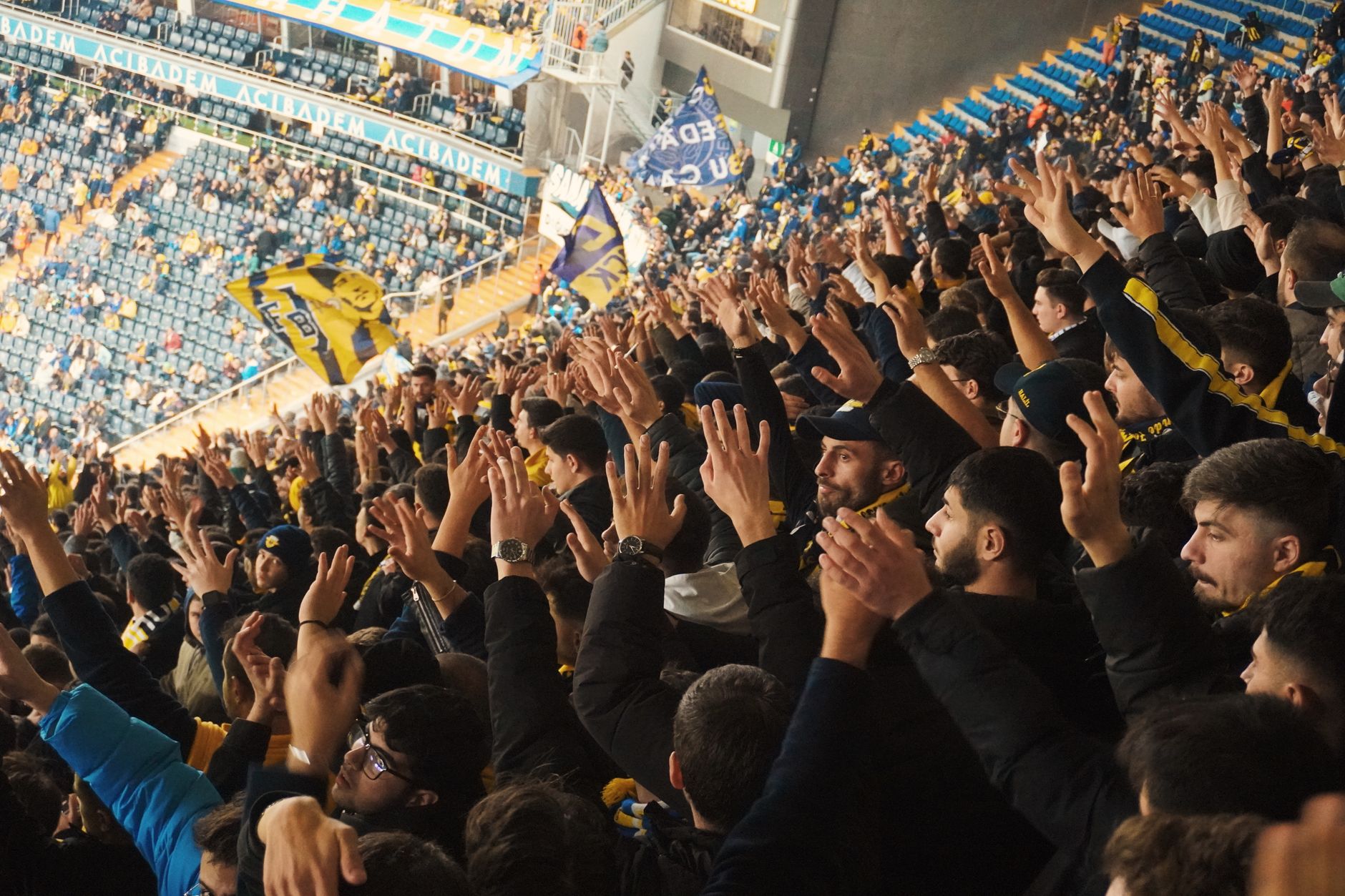
Photo by hayati ilker ergün on Pexels
Where does the 2026 World Cup fail?
The 2026 World Cup’s principal weaknesses are its size, geographical distance, environmental demands, and the risk that commercial scale overwhelms sporting intimacy. A 104-match tournament offers extraordinary access, yet it also increases travel burdens for players, staff, journalists, and travelling supporters.
There is a serious competitive question beneath the glitter. More matches can mean more exposure for developing football nations, but they can also intensify fatigue and make squad depth decisive. A team with an elite starting eleven but limited substitutes may suffer more in the knockout stage than a deeper squad built for rotation. That is not a flaw in one particular nation; it is a structural consequence of a tournament stretching from June 11 through July 19.
The betting and prediction environment has weaknesses too. Popular teams attract public money because supporters identify with Brazil, Argentina, France, England, Germany, Spain, or the United States, not because every available price represents value. A rational bettor should calculate potential return, stake size, and net position after losses rather than chasing a dramatic accumulator. Check licensing and local legality with the relevant authority; in the United States, rules can vary by state, while Canada and Mexico apply their own legal frameworks.
Responsible gambling is not a decorative footnote. The National Council on Problem Gambling advises players to set limits before betting, and the organization’s practical guidance is blunt: “Gambling should be fun, not a way to make money.” Football Compass follows the same principle. Prediction content may sharpen observation, but it cannot remove variance, referee decisions, deflections, injuries, or the ancient cruelty of a missed penalty.
Common analytical traps
- Treating tournament history as stronger evidence than current form
- Ignoring schedule congestion and long-distance travel
- Confusing a short price with a high-probability value bet
- Including too many selections in one accumulator
- Increasing stakes after a losing match
- Using unofficial injury reports as confirmed information
Want a calmer way to follow the tournament? Review our [Internal Link: responsible football betting checklist] before placing any wager.
Should you try Football Compass today?
Yes, Football Compass is worth trying as a research companion if you want daily 2026 World Cup coverage combining predictions, team tactics, player statistics, and tournament news. It should be used to improve your preparation, not as a guarantee of winnings or a substitute for official FIFA information.
The best workflow is deliberately methodical. Begin with the schedule and confirmed venue, then examine recent form, opponent quality, tactical match-up, player availability, set pieces, and market movement. Finally, write down your estimated probability before seeing whether the bookmaker’s price offers value. If your predicted 55% chance corresponds to decimal odds of 1.82, a market price of 1.60 may still be unattractive even if the team wins frequently.
A useful information-gain habit is maintaining a simple results journal. Record your pre-match reasoning, closing price, final result, and whether the key assumption was correct. After 20 or 30 entries, patterns become visible: perhaps you overvalue famous forwards, underestimate travel, or consistently miss the impact of defensive suspensions. That is a more honest performance review than counting only winning slips.
The 2026 World Cup will be loud, sprawling, nostalgic, and gloriously difficult to price. From Mercedes-Benz Stadium in Atlanta to the Los Angeles Memorial Coliseum fan celebrations, from Mexico City’s opening-night electricity to the final in New York–New Jersey, the tournament promises a summer of stories. Follow the facts, preserve your budget, and let the drama arrive on its own terms.
Ready to follow every major development with sharper context?
Key takeaways for 2026
- The tournament features 48 teams and 104 matches.
- Canada, Mexico, and the United States share hosting duties.
- The format includes 12 groups of four and a round of 32.
- Eight third-place teams advance, making goal difference and late-match incentives important.
- Atlanta and Los Angeles are major host-city and fan-experience centers.
- Official sources should be used for fixtures, entry rules, tickets, and regulations.
- Football Compass offers analysis, but no prediction eliminates uncertainty.
- Set a budget and avoid chasing losses.
For readers building a complete tournament routine, our [Internal Link: World Cup 2026 daily coverage hub] provides a natural starting point.
Frequently Asked Questions
Q: What is the 2026 FIFA World Cup?
A: The 2026 FIFA World Cup is a 48-team international football tournament hosted by Canada, Mexico, and the United States. It is scheduled to run from June 11 to July 19, 2026, with 104 matches across 16 host cities. The competition expands from the former 32-team format and introduces a round of 32 before the round of 16.
Q: How many teams qualify for the 2026 World Cup knockout stage?
A: Thirty-two teams qualify for the knockout stage of the 2026 World Cup. The 12 group winners, 12 runners-up, and eight best third-place teams advance from the group phase. This structure creates a round of 32 and makes goal difference, points, and official tie-break rules especially important.
Q: How can I follow 2026 World Cup predictions responsibly?
A: Follow predictions by comparing team news, tactical match-ups, player availability, and prices rather than copying a single tip. Football Compass can provide analytical context, but readers should verify fixtures through FIFA and confirm betting legality in their jurisdiction. Set a fixed budget, record stakes and returns, and never increase a wager to recover a previous loss.
Q: What is the difference between the 2026 World Cup and earlier tournaments?
A: The main difference is expansion from 32 teams and 64 matches to 48 teams and 104 matches. The 2026 edition also uses three host countries—Canada, Mexico, and the United States—across 16 cities. Supporters should expect more travel variation, more group-stage permutations, and a new round-of-32 knockout stage.
Q: How much does it cost to attend the 2026 World Cup?
A: There is no single total cost because tickets, flights, hotels, local transport, food, and match locations vary substantially. A supporter attending one match may spend far less than someone following a team across several countries, while major cities such as Los Angeles and New York–New Jersey may carry higher accommodation costs. Use FIFA’s official ticket information and create a separate travel budget before purchasing anything.
Q: What should I do if World Cup fixture or ticket information changes?
A: Check FIFA and the official host-city website first, then compare the update with your booking provider or ticket account. Avoid relying on screenshots, unofficial resale claims, or social-media posts without a verifiable source. Keep confirmation emails, payment records, passport details, and cancellation terms together so you can act quickly if a venue, time, or ticket condition changes.
Q: Is Football Compass a bookmaker or an official FIFA website?
A: Football Compass is a football-content site, not FIFA and not a bookmaker. It focuses on 2026 World Cup match predictions, team tactics, player stats, and tournament coverage for fans. Use FIFA for official competition information and use Football Compass as an analytical resource, while checking local rules before considering any regulated betting service.
The 2026 FIFA World Cup deserves more than hurried predictions and recycled headlines. Track the schedule, respect the distance between host cities, measure your assumptions, and keep the beautiful uncertainty of football firmly in view.
Find the latest tournament analysis and planning resources here.
Thank you for reading.
Football Compass · Archive