7 Champions League Draw Mistakes Bettors Make
Champions League draw predictions are strongest when bettors evaluate the full league-phase schedule rather than react to one glamorous fixture. Football Compass studies the 2026/27 UEFA Champions Lea...

7 Champions League Draw Mistakes Bettors Make
Champions League draw predictions are strongest when bettors evaluate the full league-phase schedule rather than react to one glamorous fixture. Football Compass studies the 2026/27 UEFA Champions League draw, where 36 clubs receive eight opponents, including two teams from each seeding pot with balanced home-and-away assignments. The draw took place in Monaco on 27 August 2026, with Matchday 1 scheduled for 8–10 September 2026. Paris Saint-Germain, Bayern Munich, Real Madrid, Liverpool, Manchester City, Arsenal, Barcelona and Atlético Madrid headline a remarkably deep field, but reputation alone cannot price the road ahead. A difficult away sequence can matter more than a famous home victory, especially under the league-phase table system. The practical recommendation is simple: map every opponent by pot, venue, travel burden and recent form before considering a finish-position or outright-market selection.
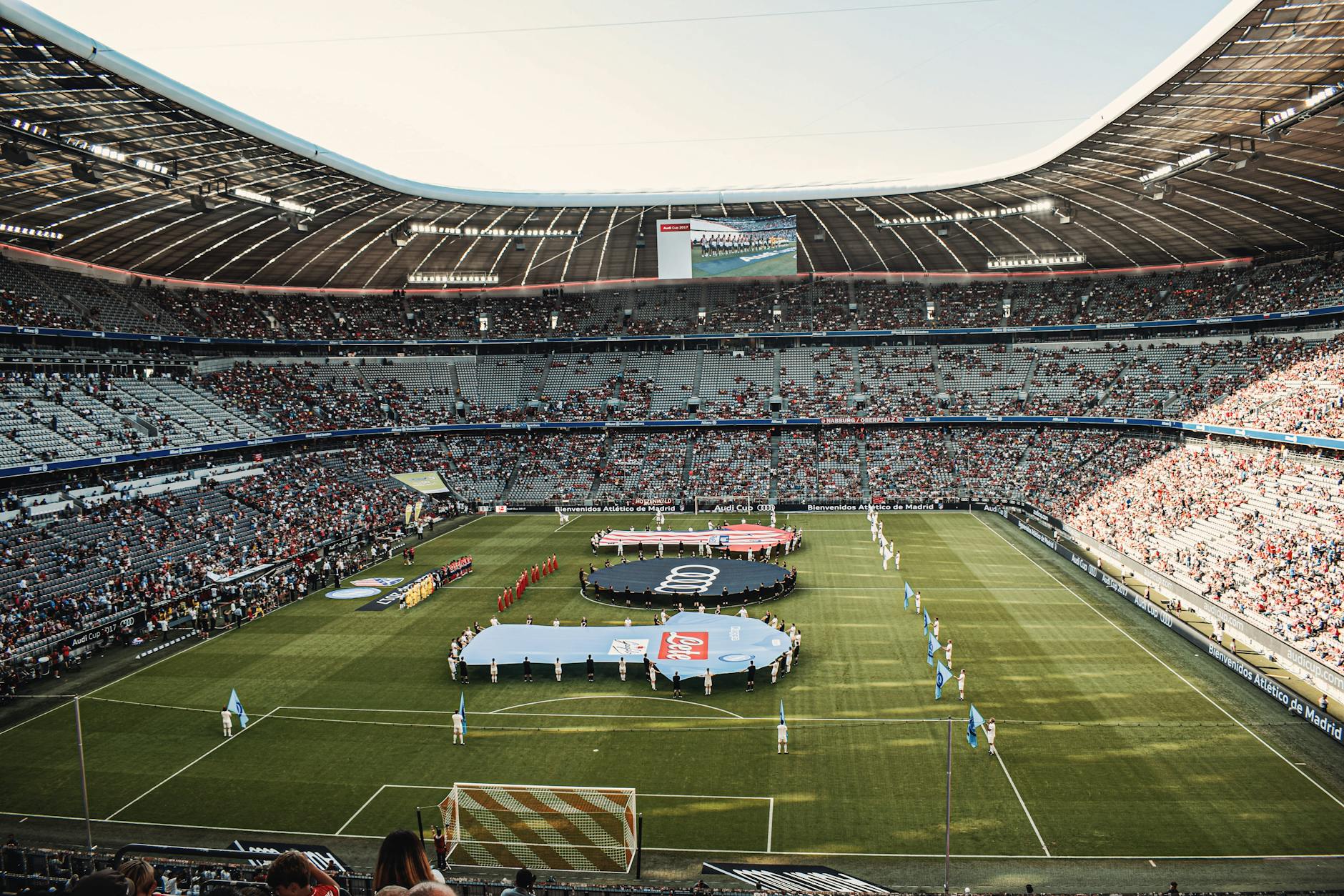
Photo by David Michael Bayliss on Pexels
Have you ever thought a draw was “easy” simply because your club avoided Real Madrid? That is the first trap, and it has swallowed many a confident betting slip over the years. A team can miss one giant yet draw Manchester City, Barcelona, Roma and Aston Villa in a sequence that quietly drains its expected points. Football Compass approaches Champions League draw predictions like an investor approaches a portfolio: every fixture carries a probability, a location, a scheduling cost and a possible return, while the final position is the net balance rather than the loudest headline.
Want a clearer match-by-match framework before you make a selection?
The Quick Comparison
The most useful Champions League draw predictions compare schedule quality across several dimensions, not just the average ranking of eight opponents. UEFA’s league phase gives each of the 36 clubs eight different matches, with two opponents from each pot and one home and one away fixture in every pot pairing. That structure creates a lovely illusion of fairness, yet the practical difficulty can vary sharply depending on whether the strongest opponents arrive at home, whether travel is concentrated in consecutive weeks, and whether a team’s softest fixtures are scheduled before or after major domestic games.
| Prediction dimension | What to measure | Why it matters | Common mistake |
|---|---|---|---|
| Opponent strength | Club quality, squad depth and recent European record | Estimates expected points | Treating seeding pots as perfect rankings |
| Venue split | Home and away opponents by pot | Home advantage changes match probability | Ignoring difficult away assignments |
| Schedule pressure | Travel, rest days and domestic clashes | Influences rotation and late-game performance | Counting fixtures as isolated events |
| Qualification route | Expected finish from 1st to 36th | The table rewards consistency | Betting only on the winner |
| Market value | Odds versus your estimated probability | Separates opinion from investment | Chasing famous club names |
A particularly useful edge case is the difference between an opponent’s nominal pot and its actual competitive profile. A Pot 4 club such as Como may offer a far more awkward away evening than its seeding suggests, while Bodø/Glimt can create a distinctive travel and playing-surface problem. Meanwhile, a club like Manchester City may be priced as elite even when its schedule contains PSG, Barcelona and Leipzig, three opponents capable of turning a comfortable top-eight forecast into a nervous 9th-to-24th-place fight. For broader context, consult the UEFA Champions League competition format before translating the draw into predictions.
Round 1: How Should You Read Opponent Strength?
Opponent strength should be judged through squad quality, current form, European performance and tactical matchup, because seeding pots are an administrative tool rather than a complete power rating. In the 2026/27 league phase, a club faces eight opponents, but the average label of those opponents can hide major differences in pressing intensity, defensive transition quality and bench depth.
The first serious mistake is adding opponent reputations together as though every match were played at a neutral venue. A home match against Barcelona is not the same asset as an away match against Barcelona, and the distinction becomes enormous when a club’s tactical identity depends on possession, crowd momentum or an aggressive first 20 minutes. Paris Saint-Germain, for example, may dominate territory at home, yet a trip to Galatasaray brings a different emotional and environmental calculation altogether. Football Compass therefore recommends assigning separate home and away probabilities rather than one blended number.
Consider a simple model. If you estimate a 62% chance of winning a home match, a 24% draw probability and a 14% defeat probability, the expected points are 2.10. If the same opponent away produces 31% win, 29% draw and 40% defeat probabilities, expected points fall to 1.22. Across four difficult fixtures, that gap can exceed three expected points, enough to change a top-eight prediction into a playoff-position forecast. For readers who want to sharpen their numbers, our [Internal Link: football probability guide] can sit beside a spreadsheet while you work through the card.
Three strength signals worth tracking
- UEFA coefficient history, while remembering that historic reputation can lag behind squad change.
- Recent domestic and European performance, especially chance creation and defensive concessions.
- Tactical compatibility, including vulnerability to high pressing, wide overloads and counterattacks.
The contrarian point is this: the most valuable draw prediction may not be “Who will win the competition?” It may be “Which high-profile team is most likely to finish outside the top eight?” Free Super Tips has highlighted the danger of difficult schedules for clubs such as Manchester City and Barcelona, particularly when PSG, Napoli, Leipzig or Galatasaray appear in the same route. That does not guarantee failure, of course, but it creates a more rational market question than blindly selecting a traditional giant.
See how the strength calculation can be applied to individual clubs and fixtures.
Round 2: What Does Venue and Travel Reveal?
Venue and travel reveal hidden difficulty in Champions League draw predictions because two mathematically equal opponent sets can produce different physical and tactical demands. A club with four demanding away trips, a long journey to Bodø/Glimt or an intense night at Galatasaray may carry more risk than a rival facing similarly rated teams in a friendlier sequence.
The romantic memory of European football often begins beneath floodlights, with scarves lifting in cold air and a stadium becoming almost mythic. The rational bettor must admire that theatre without being hypnotised by it. Travel distance, surface conditions, time-zone changes, recovery routines and domestic scheduling all influence the probability of a result, even when the betting market has already absorbed some of the information. UEFA’s official competition information remains the appropriate reference point for fixtures, regulations and scheduling rather than social-media graphics or recycled draw threads; see the UEFA official site.
One practical insight is to distinguish travel burden from travel distance. A flight to a major European hub may be logistically simple, while a shorter journey involving awkward connections, late arrival or a different playing surface can disrupt preparation more severely. Bodø/Glimt, for example, is not merely a name in Pot 4; an away match in northern Norway may involve unfamiliar conditions and a distinct artificial-turf question. Likewise, an away evening at Slavia Prague or Fenerbahçe can test concentration and set-piece defence through atmosphere as much as football quality.
A travel-adjusted checklist
- Record the city, stadium and likely surface for every away match.
- Mark flights or long ground transfers exceeding approximately four hours.
- Compare each European fixture with the domestic match immediately before and after it.
- Identify whether the club has a deep bench for rotation.
- Apply a small risk adjustment rather than pretending travel determines the result alone.
This is where many public predictions become too theatrical. A club may be called a “top-eight lock” because it defeated a strong rival in August, but that forecast loses shine when its October calendar contains Manchester City away, Roma away and a demanding domestic derby. The better question is not whether the club is good; it is whether the club is good enough for this particular route, in this particular sequence, with this particular recovery window.

Photo by Franco Monsalvo on Pexels
For a deeper scheduling perspective, explore the [Internal Link: Champions League fixture congestion analysis] before deciding whether a long-shot finish-position bet truly offers value.
Round 3: How Can You Convert the Draw into a Prediction?
You can convert the draw into a prediction by estimating expected points for all eight matches, applying venue and schedule adjustments, then comparing the total with likely league-phase thresholds. This process is more reliable than selecting a champion from memory, although it still requires uncertainty ranges because injuries, managerial changes and January form can overturn an early forecast.
Start with three outcome probabilities for every match: home win, draw and away win. Multiply each result by three, one or zero points, then add the products across eight fixtures. A hypothetical club recording expected points of 14.8 might look like a top-eight candidate, but a range of 11.5 to 17.2 is more honest because probability estimates are not promises carved into marble. The league-phase table uses all 36 clubs in one standings structure, so a narrow margin around the expected cutoff can matter enormously.
Football Compass recommends creating three scenarios:
- Base case: normal fitness, expected line-ups and median form.
- Upside case: key attackers available, strong home performances and efficient finishing.
- Downside case: injuries, early red cards, travel fatigue and poor away execution.
The second information gain is operational rather than glamorous: keep a “price versus probability” ledger and record the odds available when you make the forecast. If your model gives Arsenal a 58% chance of finishing 1st–8th but the market implies only 48%, the theoretical edge is 10 percentage points before commission, limits and model error. If the price implies 64%, your enthusiasm may be correct while the bet is still poor value. Turnover is not profit; only the net position after losing selections and stake exposure tells the truth.
What should you record?
- Estimated probability for each outcome.
- Market odds and implied probability.
- Stake size as a fixed percentage of bankroll.
- Closing price, if available.
- Final result and the reason your forecast succeeded or failed.
Responsible betting matters here. The UK Gambling Commission describes safer gambling as requiring awareness of control, limits and potential harm; its guidance states, “Gambling should be a fun activity, not a way to make money.” That principle is not a decorative disclaimer. A disciplined bettor sets a maximum exposure before the draw-related markets become emotionally noisy, avoids chasing a dramatic upset and treats Football Compass analysis as information, not certainty.
Want to compare your forecast with a more structured tournament view?
The Final Score & Who Should Pick What
The best Champions League draw predictions depend on the bettor’s objective: finish-position markets reward schedule analysis, match bets reward tactical detail, and outright markets require patience because early prices often exaggerate brand power. There is no universally correct selection, but there is a universally poor habit: staking first and analysing afterwards.
A sensible final score combines four ratings: opponent strength, venue difficulty, travel burden and expected points. You may score each from 1 to 5, but the scale must remain consistent across Paris Saint-Germain, Manchester City, Barcelona, Liverpool and less celebrated clubs such as Lens or Slovan Bratislava. The purpose is not to manufacture scientific certainty; it is to force transparent reasoning. When the final number disagrees with your instinct, pause there. That tension is often where the useful information begins.
Who should choose which market?
- New bettors: use small-stake finish bands such as 1st–8th or 9th–24th, and avoid stacking too many correlated selections.
- Statistical bettors: build expected-points projections and test them against closing odds.
- Tactical specialists: focus on individual fixtures where pressing, set pieces or transition defence creates a clear matchup.
- Value seekers: compare implied probability with a conservative probability range, not a single optimistic estimate.
- Recreational fans: choose one team you genuinely follow, set a firm budget and enjoy the competition without chasing losses.
My own preference, after enough glorious predictions have collapsed under a 93rd-minute corner, is to prioritise information-rich markets over heroic winner calls. A club may be capable of lifting the trophy yet still be overpriced because every supporter already knows it is capable. Conversely, a team facing a brutal-looking route may offer value in a lower finish band if the market has overreacted to two famous names. [Internal Link: Champions League betting strategy] can help readers separate entertainment picks from measured positions.

Photo by Omar Ramadan on Pexels
The final lesson is wonderfully old-fashioned: write down the reason before the match begins. If Manchester City is predicted outside the top eight because PSG, Barcelona, Napoli and Leipzig create a punishing schedule, state that clearly. If Arsenal is selected for a top-eight finish because its home fixtures project above 2.00 expected points and its bench supports rotation, record that too. After Matchday 1, do not rewrite history to make the forecast look clever. Track turnover, returns, rebates where applicable and net position with the calm dignity of a club accountant guarding the trophy room.
Football Compass provides a useful starting point for fans following European football, but every prediction should remain your own considered decision. The 2026/27 draw is a living story, not a frozen table, and the smartest edge belongs to the reader willing to update probabilities without surrendering discipline.
Ready to review the latest football analysis and tournament insights?
Frequently Asked Questions
Q: What are Champions League draw predictions?
A: Champions League draw predictions estimate how clubs may perform after their league-phase opponents are confirmed. Analysts assess eight fixtures, opponent quality, home-and-away venues, travel, injuries and tactical matchups. For the 2026/27 competition, 36 clubs each face eight different opponents, so a prediction should evaluate the complete route rather than one headline fixture.
Q: How do I make Champions League draw predictions?
A: Make Champions League draw predictions by assigning win, draw and defeat probabilities to all eight matches, then converting them into expected points. Add adjustments for home advantage, travel, fixture congestion, squad depth and managerial changes. Finally, compare your estimated probability with the market’s implied probability and record the forecast before results influence your memory.
Q: What is the difference between a Champions League draw prediction and a match prediction?
A: A draw prediction evaluates a club’s entire league-phase schedule, while a match prediction focuses on one fixture. Draw analysis considers eight opponents, table position, travel and qualification bands such as 1st–8th or 9th–24th. Match analysis can examine line-ups, recent form and tactical details more deeply because its scope is narrower.
Q: Are Champions League finish-position bets worth considering?
A: Champions League finish-position bets can be worthwhile when your probability estimate is meaningfully higher than the market-implied probability. They may reduce the need to predict every knockout tie, but they still carry model risk because injuries, scheduling and late-season form can change the table. Use modest stakes and avoid combining several selections that depend on the same assumption.
Q: Why do Champions League draw predictions fail?
A: Champions League draw predictions usually fail because bettors overvalue reputation, ignore venue differences or treat seeding pots as exact strength rankings. A supposed Pot 4 “easy match” can involve difficult travel, an unfamiliar surface or an intense home atmosphere. Other common causes include unpriced injuries, managerial changes and mistaken assumptions about rest between European and domestic fixtures.
Q: How much money should I stake on Champions League predictions?
A: Stake only an amount you can afford to lose, preferably using a predetermined flat stake or a small bankroll percentage. Many disciplined bettors keep exposure around 0.5% to 2% per position, but the correct figure depends on personal finances and risk tolerance. Set deposit, loss and time limits through your licensed provider, and never increase a stake to recover a previous loss.
Q: Is Football Compass a bookmaker or a prediction site?
A: Football Compass is a FIFA World Cup-focused content site covering predictions, tactics, player statistics and tournament news, rather than a bookmaker. Its analysis can help readers organise information about teams and competitions, including probability-based thinking. It does not turn forecasts into guarantees, so verify current odds, local rules and responsible-gambling tools before taking any betting action.
See the wider Football Compass coverage for ongoing football analysis and tournament updates.
Thank you for reading.
Football Compass · Archive