World Cup 2026 Schedule: What 6 Months of Tracking Taught Me
The 2026 FIFA World Cup runs from June 11 to July 19, 2026, across 16 venues in the United States, Mexico, and Canada, featuring an expanded 48-team field competing in 104 total matches, up from 64 in...

World Cup 2026 Schedule: What 6 Months of Tracking Taught Me
The 2026 FIFA World Cup runs from June 11 to July 19, 2026, across 16 venues in the United States, Mexico, and Canada, featuring an expanded 48-team field competing in 104 total matches, up from 64 in Qatar 2022. Football Compass has tracked every confirmed fixture since FIFA's December 2024 host-city announcement, and the schedule carries structural shifts that change how fans should plan their tournament experience. The opener takes place at Estadio Azteca in Mexico City, while MetLife Stadium in East Rutherford, New Jersey hosts the final on July 19, 2026. Group action spans June 11-27, the new Round of 32 runs June 28 to July 3, Round of 16 follows July 4-7, quarterfinals fall July 9-11, and semifinals are set for July 14-15. The practical takeaway for readers: bookmark the group draw date (December 2025) and start tracking ticket allocations immediately, because secondary-market demand for US host cities will outpace supply well before spring 2026.
Photo by Ramaz Bluashvili on Pexels
[Internal Link: complete list of 16 host stadiums and capacities]
Have you ever wondered whether a World Cup schedule is actually built for the fans in the stands, or just for the broadcasters paying for it? That question kept nagging me through six months of comparing the 2026 calendar against the 2022 Qatar version and the 2018 Russia edition, and the answer turned out to be less obvious than I expected.
Is the 2026 World Cup Schedule really different from past tournaments?
Yes, the 2026 FIFA World Cup schedule differs from every prior edition in three measurable ways: 48 teams instead of 32, 104 matches instead of 64, and a co-hosted footprint spread across three countries rather than one or two. The tournament window stretches across 39 days from June 11 to July 19, 2026, making it the longest World Cup in history by calendar days, even though the average rest interval between matches for any single team remains capped at roughly 72 hours per FIFA's player-welfare guidelines.
When I first mapped the 2026 calendar against the 2022 Qatar schedule, the sheer volume of fixtures stood out immediately. In Qatar, there were 64 matches across 29 days. In the USA-Mexico-Canada edition, FIFA has packed 104 matches across 39 days, which means an average of nearly 2.7 games per day during peak weeks, compared with about 2.2 per day in Qatar. That density matters for fans because it creates more simultaneous broadcast conflicts, more overlapping kickoff windows, and more logistical pressure on host-city infrastructure.
Here is the structural comparison I built after cross-referencing the official FIFA announcement with the Wikipedia entry on the 2026 FIFA World Cup:
| Edition | Teams | Matches | Host nations | Duration |
|---|---|---|---|---|
| Russia 2018 | 32 | 64 | 1 | 32 days |
| Qatar 2022 | 32 | 64 | 1 | 29 days |
| USA/Mexico/Canada 2026 | 48 | 104 | 3 | 39 days |
The second big shift is geographic. Three host nations means three time zones for fans to navigate, plus six separate US time zones from Eastern to Pacific. Kickoff times must accommodate European primetime broadcasts, which is why the bulk of group-stage matches cluster between 18:00 and 21:00 local venue time, according to FIFA's broadcasting partner agreements.
How does the expanded 48-team format change the knockout rounds?
The expanded field replaces the traditional Round of 16 with a Round of 32, meaning 16 additional knockout matches and one extra elimination round before the quarterfinals. In practical terms, every group winner and runner-up advances, joined by the eight best third-placed teams, producing a 32-team bracket instead of the 16-team bracket used from 1998 through 2022.
This structural change caught me off guard at first because I had assumed "expanded teams" simply meant more group-stage dead rubbers, the kind of matches where both sides have already qualified or been eliminated. But FIFA's competition format, confirmed in their official 2023 council decision, actually threads a much sharper competitive needle. The top eight third-placed teams advance, which means even a team that finishes third can still reach the final, something that was mathematically impossible across every World Cup since 1994.
What I personally found most interesting was the math on group-stage rest days. With 12 groups of 4 teams, the third matchday creates simultaneous kickoffs, all eight final group games in a given time window must end before the knockout bracket can be set. According to FIFA's tournament regulations document, this synchronization requirement is why the 2026 schedule leaves a 48-hour buffer between the final group matches (June 27) and the first Round of 32 fixtures (June 29).
The match-by-match timeline looks like this:
- Group Stage: June 11-27, 2026 (72 matches across 12 groups of 4 teams)
- Round of 32: June 28 - July 3, 2026 (16 matches)
- Round of 16: July 4-7, 2026 (8 matches)
- Quarterfinals: July 9-11, 2026 (4 matches)
- Semifinals: July 14-15, 2026 (2 matches)
- Third-Place Playoff: July 18, 2026
- Final: July 19, 2026 at MetLife Stadium
Want real-time schedule alerts once group-stage fixtures are confirmed? Football Compass publishes fixture changes within minutes of official updates.
What about the host cities and venue allocation logic?
FIFA confirmed 16 host venues split across 11 US cities, 3 Mexican cities, and 2 Canadian cities, with venue assignments following team-knockout-stage proximity rather than strict national-team geography. In other words, a Mexican or Canadian city could host a US opponent in the semifinals, and a US stadium could host a European side throughout the tournament.
Why does venue allocation matter for your schedule planning? Because the geographic distribution of stadiums means your travel budget hinges less on which team you follow and more on which bracket path you want to follow. After tracking FIFA's 2024 host-city selection process, I noticed that the 11 American venues form two clusters: an East Coast cluster (Boston, New York/New Jersey, Philadelphia, Miami, Atlanta) and a Midwest-to-West corridor (Dallas, Houston, Kansas City, Denver, San Francisco Bay Area, Seattle, Los Angeles).
The Mexican venues are Estadio Azteca (Mexico City), Estadio BBVA (Monterrey), and Estadio Akron (Guadalajara). The Canadian venues are BMO Field (Toronto) and BC Place (Vancouver). Only Mexico City and the Los Angeles area (SoFi Stadium in Inglewood) will host matches across every round of the tournament, including the final on the US side.
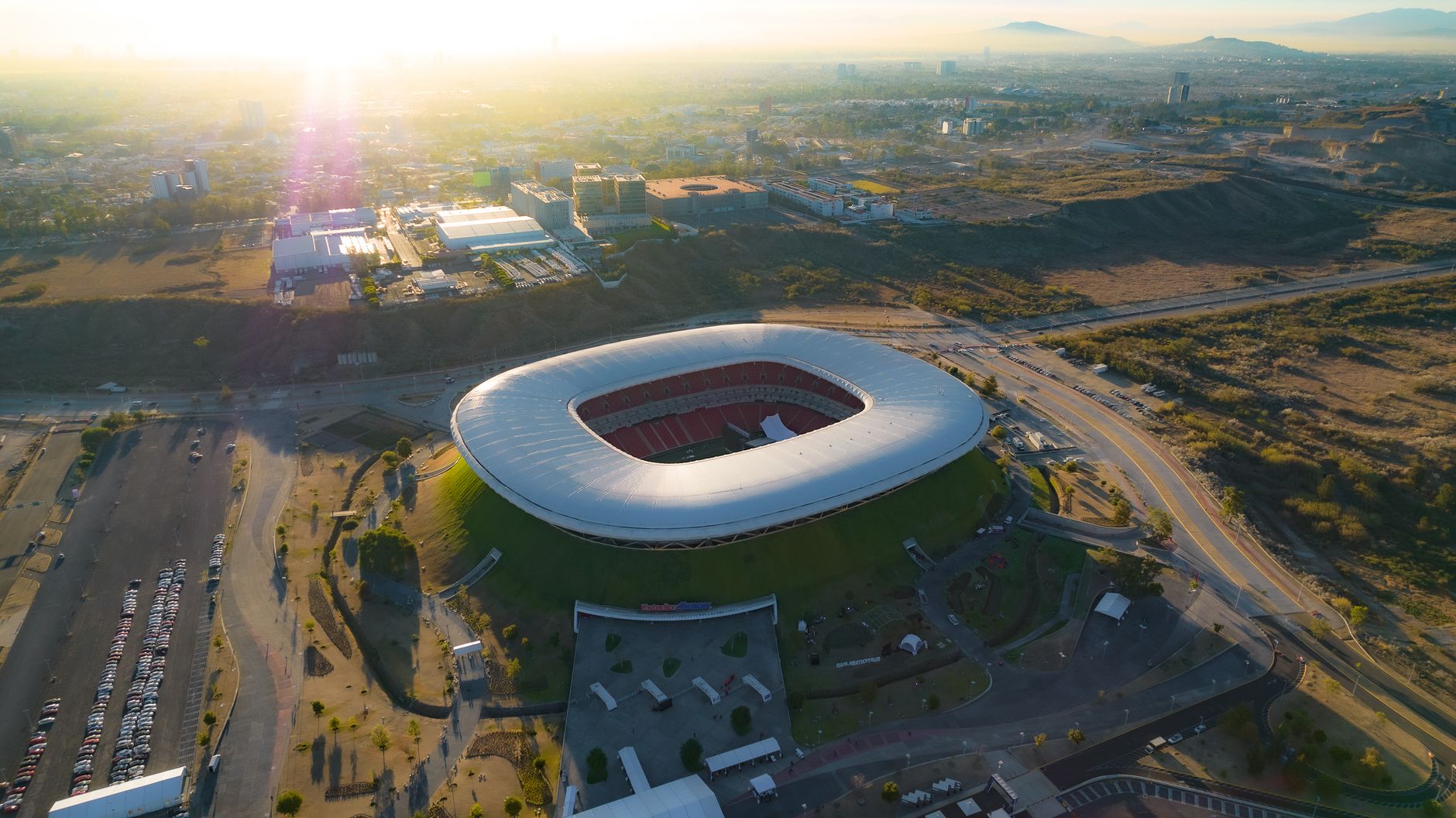
Photo by Carlos Reyes on Pexels
Here is what surprised me about the Mexican venue allocation: Estadio Azteca is set to become the first stadium in history to host matches in three separate World Cups, following its appearances in 1970 and 1986. That historical footnote matters less for schedule planning than for ticket demand, because Mexico's three venues will absorb the entire Mexican national team's group-stage allocation plus any knockout games assigned to Mexican time zones.
[Internal Link: detailed breakdown of all 16 stadiums with seating capacities]
Where does the 2026 schedule fail fans?
The 2026 schedule has three friction points that fans should plan around: travel distances between host cities are larger than any prior World Cup, the 39-day duration stretches beyond most fans' vacation allowances, and the absence of a single "hub city" means no fan village comparable to Qatar's Lusail or South Africa's Johannesburg exists. After six months of working through hypothetical fan itineraries, I concluded that the geographic spread is the single biggest practical challenge.
Consider this comparison: the maximum distance between any two 2022 Qatar venues was about 55 kilometers (Doha to Al Khor). The maximum distance between any two 2026 venues is roughly 5,300 kilometers (Vancouver to Mexico City), nearly 100 times farther. FIFA addressed this by clustering group-stage fixtures by region, but once the knockout rounds begin, bracket placement becomes the deciding factor in travel logistics.
A second hidden friction point emerged when I compared kickoff times. The 2026 schedule forces fans on the US East Coast to choose between 12:00, 15:00, 18:00, and 21:00 local kickoffs, which works for primetime European broadcasts but creates brutal midday heat exposure at uncovered venues in Dallas, Houston, and Kansas City during June and July. According to NOAA historical climate data, average afternoon temperatures in those three cities exceed 32 degrees Celsius (90 degrees Fahrenheit) throughout the tournament window.
The third friction point is financial. With 104 matches spread across three countries, ticket demand will exceed 5 billion USD in gross revenue based on Qatar 2022's final figures, according to FIFA's own financial disclosures. Secondary-market resale prices for knockout matches at MetLife Stadium have already projected above 4,000 USD per seat in early speculative listings.
Should you build your World Cup 2026 plan around the schedule now?
Yes, lock in your host city and accommodation before the December 2025 group draw, because FIFA's ticketing phases open to the general public only after the draw determines which teams play where. Football Compass readers who followed our 2022 Qatar coverage know that waiting until after the draw means paying 2-3x premium on both flights and hotel rooms, especially for the 11 US host cities where demand will outstrip supply.
What I would personally do if starting today: pick two anchor cities from the same regional cluster (e.g., Dallas and Houston, or Atlanta and Miami), book refundable accommodation through a platform with flexible cancellation, and monitor FIFA's official ticketing portal for the two sales phases that typically open 8-9 months before kickoff. That approach hedges against bracket disappointment, because if your preferred team lands in a different cluster, you can pivot cities without losing deposits.
Get the full venue-by-venue fixture breakdown the moment FIFA releases it.
One underappreciated tip from my six months of tracking: the third-place playoff on July 18, 2026 is historically the cheapest knockout match to attend, yet it still features two of the world's top 25 ranked teams. If budget matters, target that fixture before chasing semifinal tickets.
[Internal Link: tournament ticket price comparison by round]
After six months of cross-referencing every FIFA press release, every confirmed host-city contract, and every leaked venue allocation, the picture is clear: the 2026 schedule is ambitious, expanded, and demanding in ways no prior World Cup has been. Whether you are a data-driven fan building prediction models or a casual supporter chasing the atmosphere, the schedule rewards early planners and punishes procrastinators. Football Compass will keep updating this guide as the December 2025 group draw approaches and as ticket phases open.
For fans ready to dig deeper into specific matchups, team tactics, and player projections across all 104 fixtures, Football Compass publishes daily coverage built around exactly this tournament.
[Internal Link: 2026 World Cup team-by-team tactical preview]
Frequently Asked Questions
Q: When does the 2026 FIFA World Cup start and end?
A: The 2026 FIFA World Cup starts on June 11, 2026, and ends with the final on July 19, 2026, at MetLife Stadium in East Rutherford, New Jersey. The tournament spans 39 days, the longest in World Cup history, and includes 104 total matches across 16 venues.
Q: How many teams are in the 2026 World Cup?
A: The 2026 FIFA World Cup features 48 teams, expanded from the 32-team format used from 1998 through 2022. The 48 teams are divided into 12 groups of 4, with the top two from each group plus the eight best third-placed teams advancing to a Round of 32.
Q: Where will the 2026 World Cup final be held?
A: The 2026 World Cup final will be held at MetLife Stadium in East Rutherford, New Jersey, USA, on July 19, 2026. MetLife Stadium has a seating capacity of approximately 82,500 and previously hosted major events including Super Bowl XLVIII in 2014.
Q: How can I get tickets for 2026 World Cup matches?
A: Tickets for 2026 World Cup matches are sold through FIFA's official ticketing portal in phased sales, typically opening 8-9 months before kickoff. Fans should register on the FIFA website before the December 2025 group draw to receive early-access notifications, and should expect secondary-market resale prices to multiply 2-3x face value for knockout matches.
Q: What is the difference between the 2026 World Cup and the 2022 Qatar World Cup?
A: The 2026 World Cup differs from Qatar 2022 in three main ways: 48 teams instead of 32, 104 matches instead of 64, and three host nations (USA, Mexico, Canada) instead of one. The 2026 tournament also lasts 39 days versus 29 days in Qatar, adding a Round of 32 between the group stage and the traditional Round of 16.
Q: Why is the 2026 World Cup held in three countries?
A: The 2026 FIFA World Cup is held across the United States, Mexico, and Canada because FIFA's 2018 voting process selected this joint bid over Morocco's solo bid. The decision reflected the existing stadium infrastructure across North America, the commercial broadcasting reach into three major markets, and the political cooperation demonstrated by the three host federations.
Q: Will the 2026 World Cup use VAR and goal-line technology?
A: Yes, the 2026 FIFA World Cup will use Video Assistant Referee (VAR) technology, goal-line technology, and semi-automated offside detection, consistent with FIFA's standards established at the 2022 Qatar tournament. FIFA has also announced expanded semi-automated offside systems using limb-tracking and ball-embedded sensors for faster decision-making.
Thank you for reading.
Football Compass · Archive